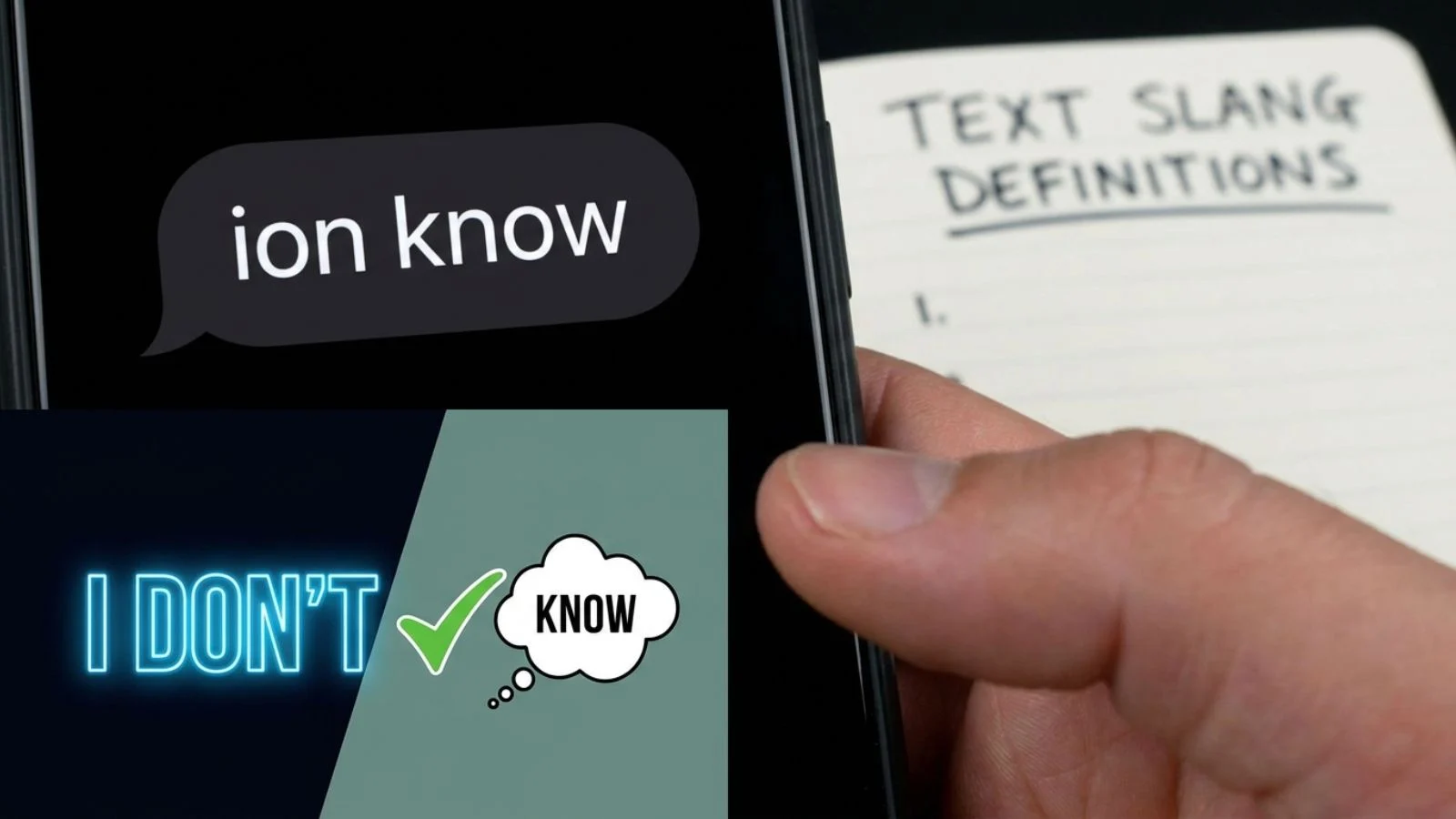
Have you ever received a message that simply says “ion know” or “ion like that” and paused for a second?
You’re not alone.
At first glance, it looks like a science word. You might even think of chemistry class. But in texting? It means something totally different.
If you’ve been confused about the ion meaning in text, this guide will clear everything up in simple, real-world language. No complicated explanations. Just straight answers you can actually use.
Let’s break it down.
What Does “Ion” Mean in Text?
In texting and online slang, “ion” means “I don’t.”
It’s a shortened, informal way of writing “I don’t,” often used in casual conversations.
Quick Definition (Featured Snippet Style)
Ion meaning in text:
“Ion” is slang for “I don’t.” It’s commonly used in casual texting, social media, and informal chats instead of writing the full phrase “I don’t.”
Simple as that.
Simple Meaning of Ion (In Easy Words)
When someone types “ion”, they are really saying:
- I don’t know
- I don’t care
- I don’t want to
- I don’t like it
It’s just faster to type.
Instead of writing:
I don’t know.
They write:
Ion know.
It’s quick. It feels relaxed. And it sounds more natural in certain online communities.
Where Is “Ion” Used?
You’ll mostly see “ion” in informal spaces. It’s not something you’d write in a school essay or work email.
Here’s where it shows up most:
1. Text Messages
Friends texting each other:
- “Ion feel like going out.”
- “Ion got time today.”
2. Social Media
Platforms like:
- TikTok comments
- Instagram captions
- Snapchat chats
- X (formerly Twitter)
3. Online Gaming Chats
Players type fast, so shortcuts like “ion” are common.
4. Group Chats
Especially among younger users and close friends.
If you’re texting someone casually, this slang fits right in.
Why Do People Use “Ion”?
Good question.
Language online is all about speed and vibe.
Here’s why “ion” became popular:
1. It’s Faster
Typing “ion” takes less time than “I don’t.”
2. It Matches How People Talk
In some accents, “I don’t” can sound like “ion” when spoken quickly.
So people started spelling it how it sounds.
3. It Feels Casual
Writing “I don’t” can feel slightly formal.
“Ion” feels relaxed and conversational.
4. It Shows Personality
Using slang helps people express identity, culture, and community online.
Real-Life Examples of Ion Meaning in Text
Let’s look at practical examples so you fully understand how it works.
Example 1
Message:
Ion know what happened.
Meaning:
I don’t know what happened.
Example 2
Message:
Ion like that movie.
Meaning:
I don’t like that movie.
Example 3
Message:
Ion wanna go.
Meaning:
I don’t want to go.
Example 4
Message:
Ion think that’s a good idea.
Meaning:
I don’t think that’s a good idea.
See the pattern?
“Ion” always replaces “I don’t.”
Ion vs Similar Terms (Comparison Table)
People sometimes confuse “ion” with other slang. Let’s compare.
| Term | Meaning | Used For | Example |
|---|---|---|---|
| Ion | I don’t | Casual texting | Ion know |
| Idk | I don’t know | General texting | Idk what happened |
| IDC | I don’t care | Stronger feeling | IDC anymore |
| Dunno | Don’t know | Informal speech | I dunno |
Notice something important:
- Ion = I don’t (general use)
- It’s not just for “I don’t know”
- It works with many phrases
When Should You Use “Ion”?
This part is important.
You should use “ion” only when:
- You’re texting close friends
- You’re on social media
- The conversation is casual
- You understand the tone
Avoid using it when:
- Writing emails to teachers
- Messaging your boss
- Writing professional content
- In academic work
It’s informal slang. Context matters.
Common Misunderstandings About Ion Meaning in Text
There are a few big misunderstandings people have.
1. It Has Nothing to Do with Science
In science, an ion is a charged particle.
But in texting, that meaning is completely unrelated.
Context changes everything.
2. It Doesn’t Mean “Ion” Literally
If someone texts:
Ion going.
They are not talking about chemistry.
They mean:
I don’t want to go.
3. It’s Not a Typo
Many people think it’s a mistake.
It’s not.
It’s intentional slang.
4. It’s Not Always “I Own”
Some people misread it as “I own.”
But in texting slang, “ion” almost always means “I don’t.”
How Did “Ion” Become Popular?
Slang spreads fast online.
“Ion” became popular through:
- Urban texting culture
- Social media trends
- Influencers and content creators
- Music lyrics
- Viral memes
Once enough people start using a term, it spreads quickly.
That’s how digital language evolves.
Pro Tips for Using “Ion” Correctly
If you want to use it naturally, follow these tips:
1. Only Use It in Casual Settings
Never in professional communication.
2. Match the Tone
If the other person writes formally, avoid slang.
3. Don’t Overuse It
Too much slang can make messages hard to read.
4. Know Your Audience
Some people may not understand it.
5. Keep It Clear
If clarity matters, write the full “I don’t.”
Is “Ion” Good or Bad Slang?
It’s neither good nor bad.
It’s just language evolving.
Slang is a normal part of communication. Every generation creates shortcuts.
The key is knowing when to use it.
Smart communication is about choosing the right style for the right moment.
Ion Meaning in Text: Quick Recap
Let’s summarize clearly:
- Ion = I don’t
- Used in casual texting
- Common on social media
- Not professional
- Not related to science
- Replaces “I don’t” in sentences
If you remember that one rule, you’ll never be confused again.
Final Thoughts
Slang like “ion” shows how fast language changes online.
It’s simple. It’s informal. And now you fully understand it.
Next time someone texts “ion know,” you won’t hesitate.
You’ll know exactly what they mean.
And maybe, you’ll even use it yourself.
Frequently Asked Questions
1. What does ion mean in text?
In texting, “ion” means “I don’t.” It’s informal slang used in casual conversations and social media.
2. Is ion short for I don’t know?
Not exactly. “Ion” means “I don’t.” It can be used in phrases like “ion know,” which means “I don’t know.”
3. Is ion proper English?
No. It’s slang. You should not use it in formal writing or professional communication.
4. Why do people say ion instead of I don’t?
It’s faster to type and matches how “I don’t” sounds when spoken quickly in casual speech.
Discover More Post
