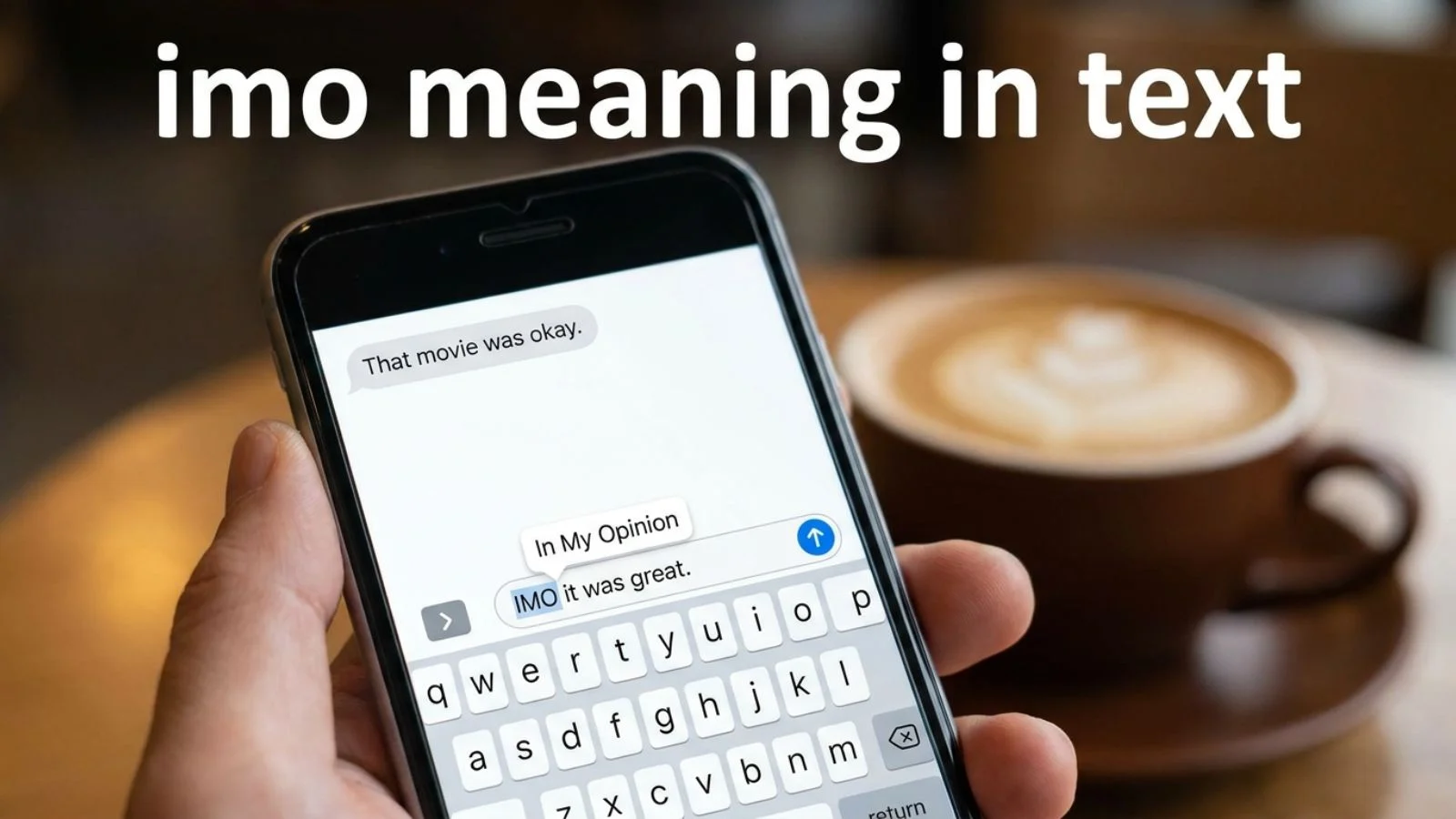
You’re texting someone.
They reply with:
“IMO, that movie wasn’t that good.”
You pause.
Wait… what does IMO mean in text?
If you’ve seen this little three-letter word pop up in messages, comments, or social media posts, you’re not alone. It’s everywhere. And once you understand it, you’ll start noticing it all the time.
Let’s break it down in the simplest way possible.
What Does IMO Meaning in Text?
IMO stands for “In My Opinion.”
It’s used when someone wants to share their personal view about something.
That’s it.
No hidden meaning. No secret slang. Just someone saying, “This is what I think.”
Simple Meaning of IMO
In easy words, IMO means “this is just my personal opinion.”
When someone uses IMO:
- They are not stating a fact
- They are not trying to argue
- They are sharing what they personally think
It softens the statement. It makes the message feel less aggressive.
For example:
- “IMO, that restaurant is overrated.”
- “IMO, blue looks better than red.”
See how it sounds calmer? It tells the reader, “This is just my view.”
Where Is IMO Used?
You’ll find IMO almost everywhere online.
Here are the most common places:
1. Text Messages
Friends use it during casual chats.
Example:
“IMO, you should go for the black dress.”
2. Social Media
On platforms like:
- Instagram comments
- Twitter (X) posts
- Facebook discussions
- TikTok comment sections
People use IMO to share their views without sounding too strong.
Example:
“IMO, this is the best song of the year.”
3. Online Forums
Reddit, Quora, and discussion boards are full of IMO.
Example:
“IMO, beginners should start with simple exercises.”
4. Gaming Chats
Gamers use it during debates about characters, weapons, or strategies.
Example:
“IMO, that character is too overpowered.”
Why Do People Use IMO?
Good question.
Why not just say your opinion directly?
Here’s why IMO is popular:
1. It Sounds Polite
Saying:
“That movie is bad.”
Sounds harsh.
But saying:
“IMO, that movie is bad.”
Feels softer.
2. It Reduces Conflict
Online arguments can get heated fast.
Using IMO shows you’re not claiming absolute truth. You’re just sharing your view.
3. It Saves Time
Instead of typing:
“In my personal opinion…”
You just type:
IMO
Quick and easy.
4. It Feels Casual
IMO fits perfectly into modern texting culture. It’s short, informal, and relaxed.
Real-Life Examples of IMO in Text
Let’s look at real examples and what they mean.
Example 1
Text:
“IMO, you handled that situation really well.”
Meaning:
“I personally think you did a good job.”
Example 2
Comment:
“IMO, the first season was better than the second.”
Meaning:
“This is just my personal preference.”
Example 3
Chat:
“IMO, you should wait before replying.”
Meaning:
“I think waiting is the better choice.”
Example 4
Debate:
“IMO, Android is better than iPhone.”
Meaning:
“This is my opinion, not a fact.”
IMO vs Similar Terms
There are other slang terms that look similar. Let’s compare them.
| Term | Full Form | Meaning | Tone |
|---|---|---|---|
| IMO | In My Opinion | Sharing a personal view | Polite, neutral |
| IMHO | In My Humble Opinion | Sharing opinion humbly | More modest |
| TBH | To Be Honest | Being truthful | Direct |
| IDK | I Don’t Know | Expressing uncertainty | Casual |
IMO vs IMHO
IMHO means “In My Humble Opinion.”
It sounds more modest.
Example:
“IMHO, that’s not the best choice.”
Some people use IMHO seriously. Others use it sarcastically.
IMO vs TBH
TBH means “To Be Honest.”
TBH sounds more direct.
“TBH, I didn’t like it.”
IMO sounds softer and less intense.
When Should You Use IMO?
You should use IMO when:
- You’re sharing a personal preference
- You want to avoid sounding rude
- You’re giving advice
- You’re joining a debate
- You’re comparing things
For example:
- “IMO, you should talk to her first.”
- “IMO, this laptop is worth the money.”
It works best in informal conversations.
When Should You NOT Use IMO?
IMO is casual slang.
Avoid it in:
- Formal emails
- Job applications
- Academic writing
- Professional reports
Instead of:
“IMO, this strategy will work.”
Say:
“In my opinion, this strategy may be effective.”
Professional settings require full phrases.
Common Misunderstandings About IMO
Let’s clear up some confusion.
1. Is IMO Rude?
No.
It’s actually the opposite. It softens your statement.
However, tone still matters.
“IMO, that idea makes no sense.”
Even with IMO, it can still sound harsh.
2. Is IMO Always Serious?
Usually yes.
But sometimes people use it sarcastically.
Example:
“IMO, I’m obviously the best player here.”
Tone and context matter.
3. Does IMO Mean the Person Is Unsure?
Not necessarily.
It just means they’re sharing a personal opinion.
They could still be very confident about it.
4. Is IMO Only for Teenagers?
No.
People of all ages use it online.
It’s common in casual internet culture.
Pro Tips for Using IMO Correctly
If you want to sound natural, follow these tips:
Use It at the Beginning
Most people place IMO at the start of the sentence.
Correct:
“IMO, this is the best option.”
Less common:
“This is, IMO, the best option.”
Don’t Overuse It
If every sentence starts with IMO, it feels repetitive.
Use it only when necessary.
Match the Tone
If the conversation is serious, write the full phrase.
If it’s casual, IMO works perfectly.
Be Respectful
IMO doesn’t give permission to be rude.
Instead of:
“IMO, that’s stupid.”
Try:
“IMO, there might be a better way.”
Tone makes a big difference.
Why Understanding IMO Matters
You might think this is just a small slang word.
But understanding it helps you:
- Communicate clearly
- Avoid misunderstandings
- Sound natural online
- Join conversations confidently
- Express opinions politely
Language is changing fast. Slang like IMO is now part of everyday digital communication.
If you know it, you stay connected.
Final Thoughts on IMO Meaning in Text
So now you know.
IMO means “In My Opinion.”
It’s simple.
It’s polite.
It’s everywhere online.
Next time someone texts you:
“IMO, you’re overthinking it.”
You won’t feel confused.
You’ll understand exactly what they mean.
And maybe, just maybe, you’ll start using it too.
FAQ About IMO Meaning in Text
1. What does IMO mean in texting?
IMO means “In My Opinion.” It is used to share a personal view in a polite and casual way.
2. Is IMO rude?
No. IMO actually softens a statement. It shows the speaker is sharing a personal opinion, not a fact.
3. What is the difference between IMO and IMHO?
IMO means “In My Opinion.”
IMHO means “In My Humble Opinion.” IMHO sounds more modest.
4. Can I use IMO in professional emails?
It’s better not to. In formal writing, use the full phrase “In my opinion” instead of the abbreviation.
Discover More Post
