Have you ever seen the word “pericolo” on a sign, in a movie, while traveling in Italy, or even in a social media post and wondered what it means?
You’re not alone.
Many people come across this Italian word and immediately want to know its English translation. While the meaning is fairly simple, understanding how Italians actually use the word can help you avoid confusion and learn a useful piece of vocabulary.
In this guide, you’ll discover the exact pericolo meaning in English, where it’s commonly used, examples, similar words, and important tips for using it correctly.
What Does Pericolo Mean in English?
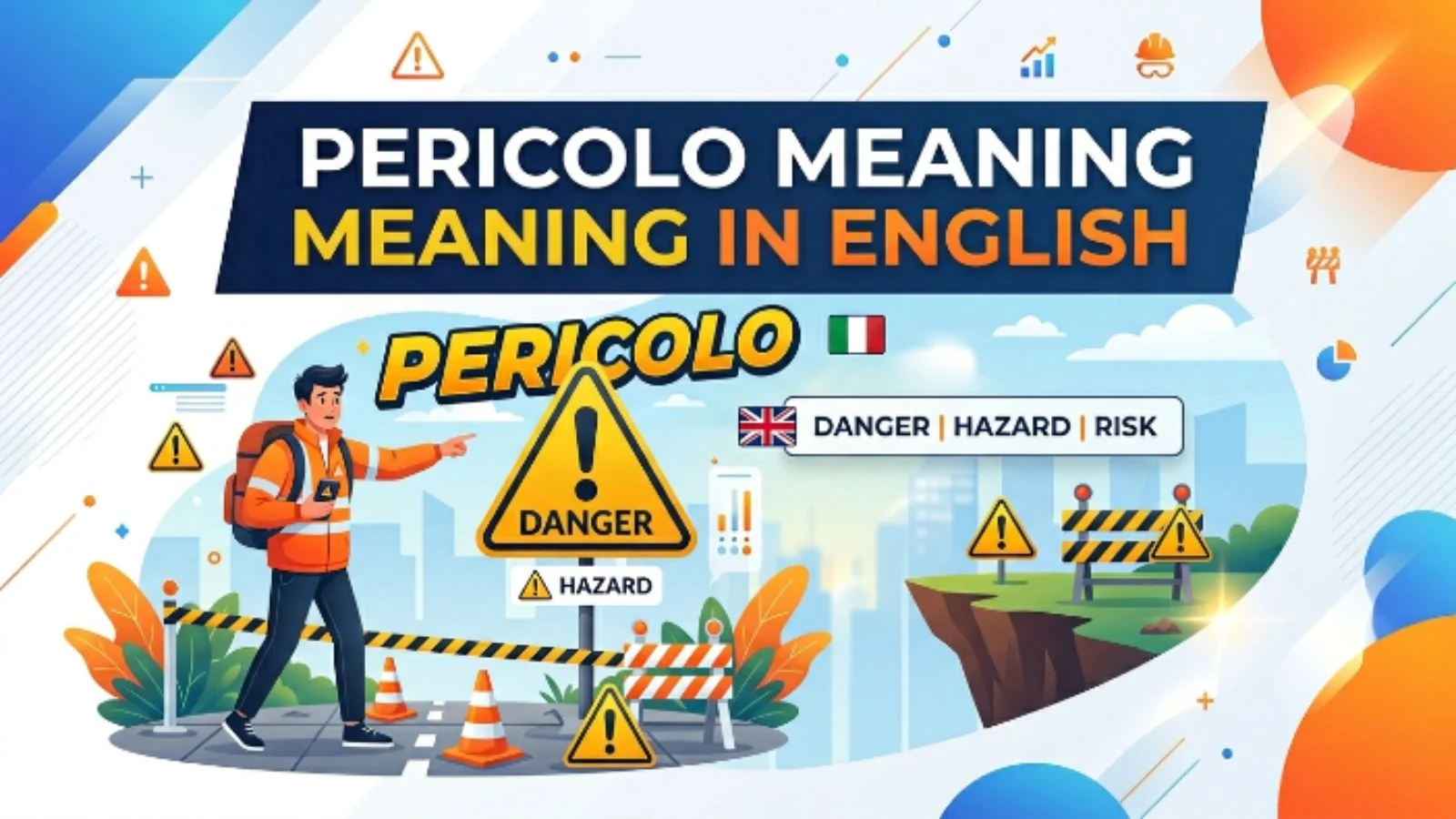
Pericolo is an Italian noun that translates to “danger”, “risk”, or “hazard” in English.
Quick Definition
Pericolo (Italian): A situation, condition, or thing that can cause harm, injury, damage, or trouble.
Featured Snippet Definition
The Italian word pericolo means danger, risk, or hazard in English. It is commonly used to warn people about unsafe situations, potential harm, or threatening conditions.
Simple Meaning of Pericolo
In everyday language, pericolo simply refers to something that could hurt you or put you in an unsafe situation.
Think of it this way:
- A dangerous road = a pericolo
- A fire hazard = a pericolo
- A risky situation = a pericolo
- A threat to safety = a pericolo
Whenever there is a possibility of harm, Italians may use the word pericolo.
Where Is Pericolo Used?
The word appears in many situations throughout Italy and Italian-speaking communities.
Safety Signs
One of the most common places you’ll see the word is on warning signs.
Examples:
- Pericolo!
- Pericolo di incendio
- Pericolo elettrico
- Zona di pericolo
These phrases alert people to potential dangers.
Roads and Construction Areas
You’ll often find the word near:
- Roadwork zones
- Construction sites
- Unsafe pathways
- Restricted areas
News Reports
Italian news outlets frequently use the word when discussing:
- Natural disasters
- Public safety concerns
- Health risks
- Dangerous weather conditions
Everyday Conversations
People may use it when talking about risky situations.
Example:
“È un pericolo per tutti.”
English translation:
“It is a danger to everyone.”
Why Do People Use the Word Pericolo?
The main purpose of the word is to communicate danger or warn others.
People use it to:
- Protect others from harm
- Describe risky situations
- Highlight safety concerns
- Explain potential threats
- Issue warnings
Because safety is important in every culture, words like pericolo are commonly used and widely understood.
Real-Life Examples of Pericolo
Let’s look at some practical examples.
Example 1
Italian:
“Pericolo di incendio.”
English:
“Fire danger.”
Explanation:
This warning tells people there is a risk of fire.
Example 2
Italian:
“Questa strada è un pericolo.”
English:
“This road is dangerous.”
Explanation:
The road presents a safety risk.
Example 3
Italian:
“Siamo fuori pericolo.”
English:
“We are out of danger.”
Explanation:
The dangerous situation has passed.
Example 4
Italian:
“Il cane rappresenta un pericolo.”
English:
“The dog represents a danger.”
Explanation:
The dog could potentially cause harm.
Example 5
Italian:
“Pericolo elettrico.”
English:
“Electrical hazard.”
Explanation:
There is a risk of electric shock.
Pericolo vs Similar Terms
Many people confuse pericolo with other words that have related meanings.
| Term | Meaning | Usage |
|---|---|---|
| Pericolo | Danger | General threat or risk |
| Rischio | Risk | Possibility of danger occurring |
| Minaccia | Threat | Something likely to cause harm |
| Hazard | Hazard | Dangerous condition |
| Danger | Danger | Direct English equivalent |
Understanding the Difference
Pericolo (Danger)
A harmful situation already exists.
Example:
“There is danger ahead.”
Rischio (Risk)
There is a chance that danger could happen.
Example:
“There is a risk of flooding.”
This distinction helps language learners understand the word more accurately.
Common Phrases Using Pericolo
You’ll often encounter these expressions.
Pericolo di Morte
Meaning:
“Danger of death.”
Used in extremely serious situations.
Fuori Pericolo
Meaning:
“Out of danger.”
Often used after accidents or medical emergencies.
Situazione di Pericolo
Meaning:
“Dangerous situation.”
Refers to unsafe circumstances.
Segnale di Pericolo
Meaning:
“Warning sign.”
A sign indicating danger nearby.
Zona di Pericolo
Meaning:
“Danger zone.”
An area that may cause harm or injury.
When Should You Use Pericolo?
Use the word when discussing:
Physical Danger
Examples:
- Fires
- Floods
- Electrical hazards
- Dangerous roads
Safety Warnings
Examples:
- Warning signs
- Public announcements
- Emergency instructions
Figurative Danger
Sometimes the word is used metaphorically.
Example:
“That decision could be a pericolo for the business.”
Meaning:
The decision could create serious problems.
Common Misunderstandings About Pericolo
Many learners make mistakes when translating the word.
Misunderstanding 1: It Only Means Immediate Danger
Not true.
Pericolo can refer to both immediate and potential danger.
Misunderstanding 2: It Always Means Physical Harm
Also incorrect.
The word can describe:
- Financial danger
- Social danger
- Political danger
- Emotional danger
Misunderstanding 3: It Means Risk Every Time
While risk is sometimes an acceptable translation, danger is usually the most accurate English equivalent.
Context matters.
How to Remember the Meaning of Pericolo
A simple memory trick can help.
Notice the similarity between:
- Pericolo
- Peril
The English word peril also means danger.
Because the words are closely related in meaning, many language learners remember them together.
Think:
Pericolo = Peril = Danger
This makes the translation much easier to recall.
Is Pericolo a Common Italian Word?
Yes.
It is one of the most commonly used safety-related words in Italian.
You’ll encounter it in:
- Travel guides
- Road signs
- Safety notices
- Newspapers
- Television reports
- Everyday conversations
Anyone learning Italian will likely come across this word early on.
Why Learning Words Like Pericolo Matters
Understanding common foreign words can make travel and communication much easier.
Knowing the meaning of pericolo helps you:
- Understand warning signs
- Stay safe while traveling
- Improve Italian vocabulary
- Read Italian content more confidently
- Communicate more effectively
Even learning a single word can make a big difference when navigating unfamiliar places.
Final Thoughts
The pericolo meaning in English is usually danger, though it can also mean risk or hazard depending on the situation.
It is a common Italian word used in safety warnings, conversations, news reports, and public signs. If you see pericolo, it generally means you should pay attention because there may be something unsafe nearby.
Understanding this simple word can help you interpret warnings correctly and expand your Italian vocabulary at the same time.
Frequently Asked Questions
What does pericolo mean in English?
Pericolo means danger, hazard, or risk in English. It refers to a situation that could cause harm or injury.
Is pericolo the same as risk?
Not exactly. Pericolo usually means danger, while risk refers to the possibility that danger may occur.
Where is the word pericolo commonly used?
It is commonly found on warning signs, construction sites, road signs, safety notices, and in everyday Italian conversations.
What does fuori pericolo mean?
Fuori pericolo means out of danger. It is often used when someone has recovered from a dangerous situation.
Is pericolo a noun or an adjective?
Pericolo is a noun in Italian. It refers to danger or a hazardous situation.
Discover More Post
