Have you ever heard the word “Nickelodeon” and thought it must have some deep Latin origin?
You’re not alone.
Because the word sounds ancient, formal, and almost “Roman,” many people assume it comes from Latin roots. But the truth is more interesting—and a little unexpected.
The real story takes us back to early entertainment history, Greek language roots, and the rise of modern cinema culture. And yes, it also connects to the famous TV network Nickelodeon that millions of kids grew up watching.
So let’s break it down in a simple, clear, and human way.
What Does “Nickelodeon Meaning in Latin” Actually Mean?
First, here’s the most important fact:
The word Nickelodeon does NOT come from Latin.
Instead, it comes mainly from Greek roots, even though many people mistakenly link it with Latin language because of its classical-sounding structure.
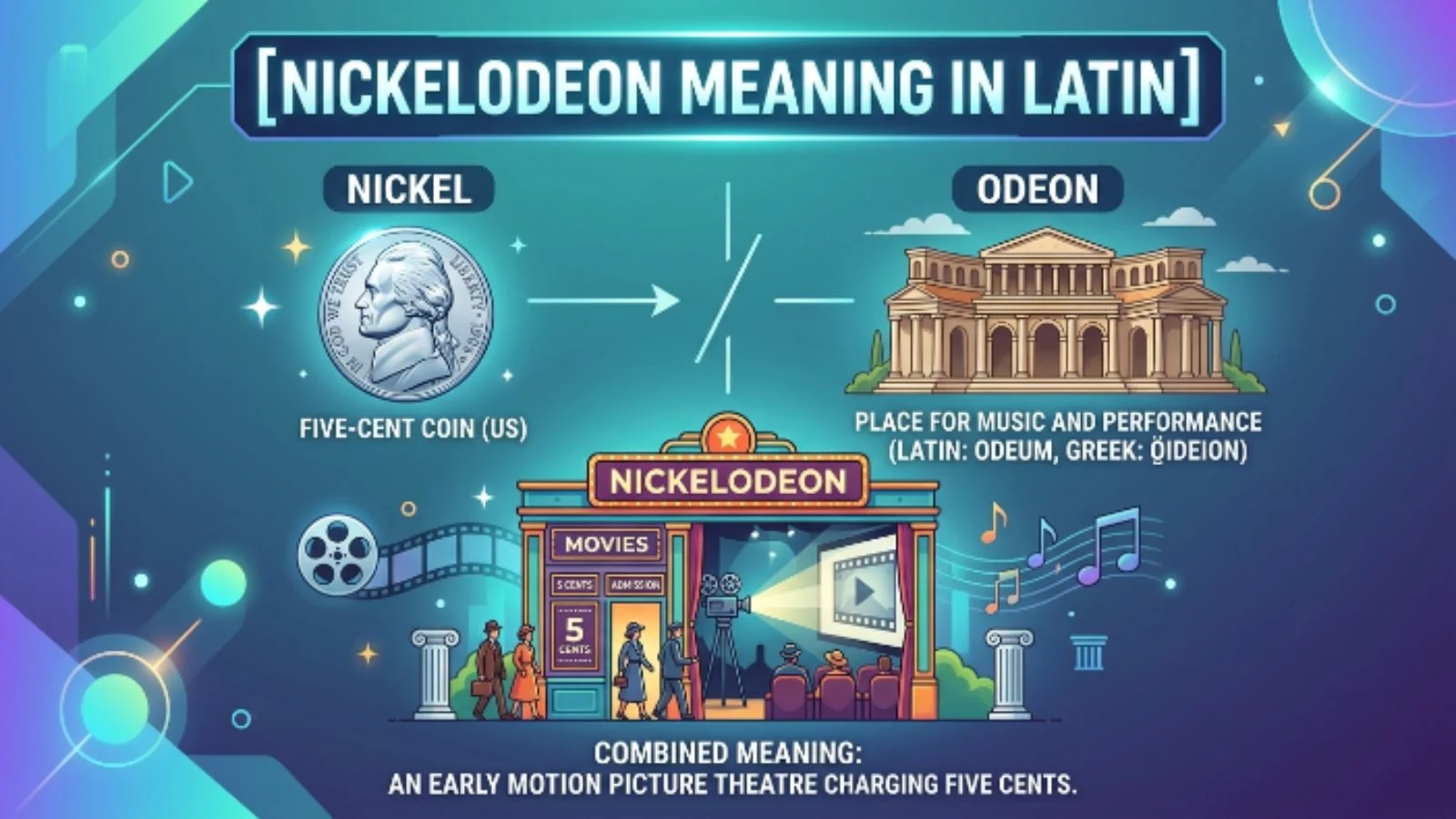
The real breakdown of the word:
- “Nickel” → refers to the U.S. coin worth 5 cents
- “Odeion” → Greek word meaning a theatre or place for performance
So together, Nickelodeon means:
A 5-cent theatre (a small, affordable movie theater in early 1900s America)
Simple Meaning of Nickelodeon
In very simple words, Nickelodeon means a small cinema where people could watch short films for a nickel (5 cents).
It was not originally a TV channel, not a modern brand, and definitely not a Latin word.
It was an early form of entertainment venue where:
- People paid very little money
- Short silent films were shown
- Entertainment was fast, simple, and affordable
So when you hear “Nickelodeon,” think:
Old-style mini movie theatre for the public
Where Is the Word “Nickelodeon” Used?
Today, the word is used in different ways depending on context.
1. Early Cinema History
The original meaning refers to early 1900s movie theaters in the United States.
These were:
- Small
- Cheap
- Very popular among working-class people
2. Modern Entertainment Brand
Today, the word is strongly associated with the children’s entertainment network Nickelodeon.
This includes:
- Kids’ TV shows
- Cartoons
- Movies
- Digital content
3. Educational and Etymology Studies
Linguists and educators use the word to explain:
- Language mixing (Greek + English usage)
- Evolution of entertainment terms
- Misconceptions about Latin roots
Why Do People Think It Has Latin Meaning?
This is a very common confusion.
People assume it is Latin because:
1. It sounds classical
Words ending in “-odeon” often feel ancient or Roman.
2. Many English words come from Latin
So people naturally assume unfamiliar words are Latin-based.
3. It looks academic
It has a structured, formal sound that reminds people of classical languages like Latin language.
But in reality:
- The “odeon” part is Greek
- The “nickel” part is modern American slang (currency-based)
So it is a hybrid modern + ancient Greek-inspired word, not Latin.
Real Examples of How “Nickelodeon” Was Used
Let’s make it more practical.
Example 1: Early 1900s America
“Let’s go to the nickelodeon to watch a film.”
Meaning:
People were going to a cheap movie theatre.
Example 2: Historical Reference
“Nickelodeons were the first step toward modern cinemas.”
Meaning:
They played a key role in movie history.
Example 3: Modern Usage
“Kids love watching shows on Nickelodeon.”
Meaning:
Now it refers to the TV entertainment brand Nickelodeon.
Nickelodeon vs Similar Terms
Here’s a simple comparison to clear confusion:
| Term | Meaning | Origin | Usage Today |
|---|---|---|---|
| Nickelodeon | 5-cent movie theatre / kids TV brand | Greek + English | Entertainment brand + historical term |
| Theatre | Place for performances | Greek | Live performances |
| Cinema | Movie theatre | Latin + Greek roots | Modern film watching |
| Odeon | Ancient performance hall | Greek | Used in theatre naming |
Key takeaway:
- Nickelodeon is more modern and hybrid
- It is NOT purely Latin like many people think
When Should You Use the Word “Nickelodeon”?
You can use the word in three main contexts:
1. Talking about history
Use it when discussing early cinema.
Example:
- “Nickelodeons changed entertainment culture in America.”
2. Talking about the TV network
Use it when referring to the kids’ brand.
Example:
- “My favorite childhood shows were on Nickelodeon.”
3. Educational writing
Use it in language or etymology explanations.
Example:
- “The word Nickelodeon comes from Greek and American origins, not Latin.”
Common Misunderstandings About Nickelodeon
Let’s clear up some myths:
Myth 1: It is a Latin word
Wrong. It is not Latin.
Myth 2: It means “golden theatre”
Wrong interpretation.
Myth 3: It is only a modern brand name
Partially wrong. The brand name comes from an older historical term.
Myth 4: It has religious or Roman meaning
No connection at all.
Pro Tips to Remember the Meaning Easily
Here are simple memory tricks:
Tip 1: Think “Nickel = 5 cents”
That tells you it’s about affordability.
Tip 2: Think “Odeon = theatre”
That tells you it’s about watching performances.
Tip 3: Combine both
Small cheap theatre = Nickelodeon
This makes it very easy to remember forever.
Final Thoughts
So, what is the real truth behind nickelodeon meaning in Latin?
It’s simple:
- It is NOT a Latin word
- It is mainly inspired by Greek language roots
- It combines “nickel” (5 cents) and “odeion” (theatre)
- It originally meant a small, cheap movie theatre
- Today it is also a famous entertainment brand Nickelodeon
The confusion happens because the word sounds ancient and classical, but its origin is actually modern history mixed with Greek influence.
Understanding this gives you a deeper appreciation of how language evolves over time—and how entertainment culture shapes words we still use today.
FAQ Section
1. Is Nickelodeon a Latin word?
No, it is not Latin. It comes mainly from Greek and American English influences.
2. What does Nickelodeon literally mean?
It means “5-cent theatre,” referring to early movie theaters.
3. Why is it called Nickelodeon?
Because people paid a nickel (5 cents) to watch short films in early theatres.
4. Is Nickelodeon still used today?
Yes, it is now a famous children’s TV network name Nickelodeon.
Discover More Post
