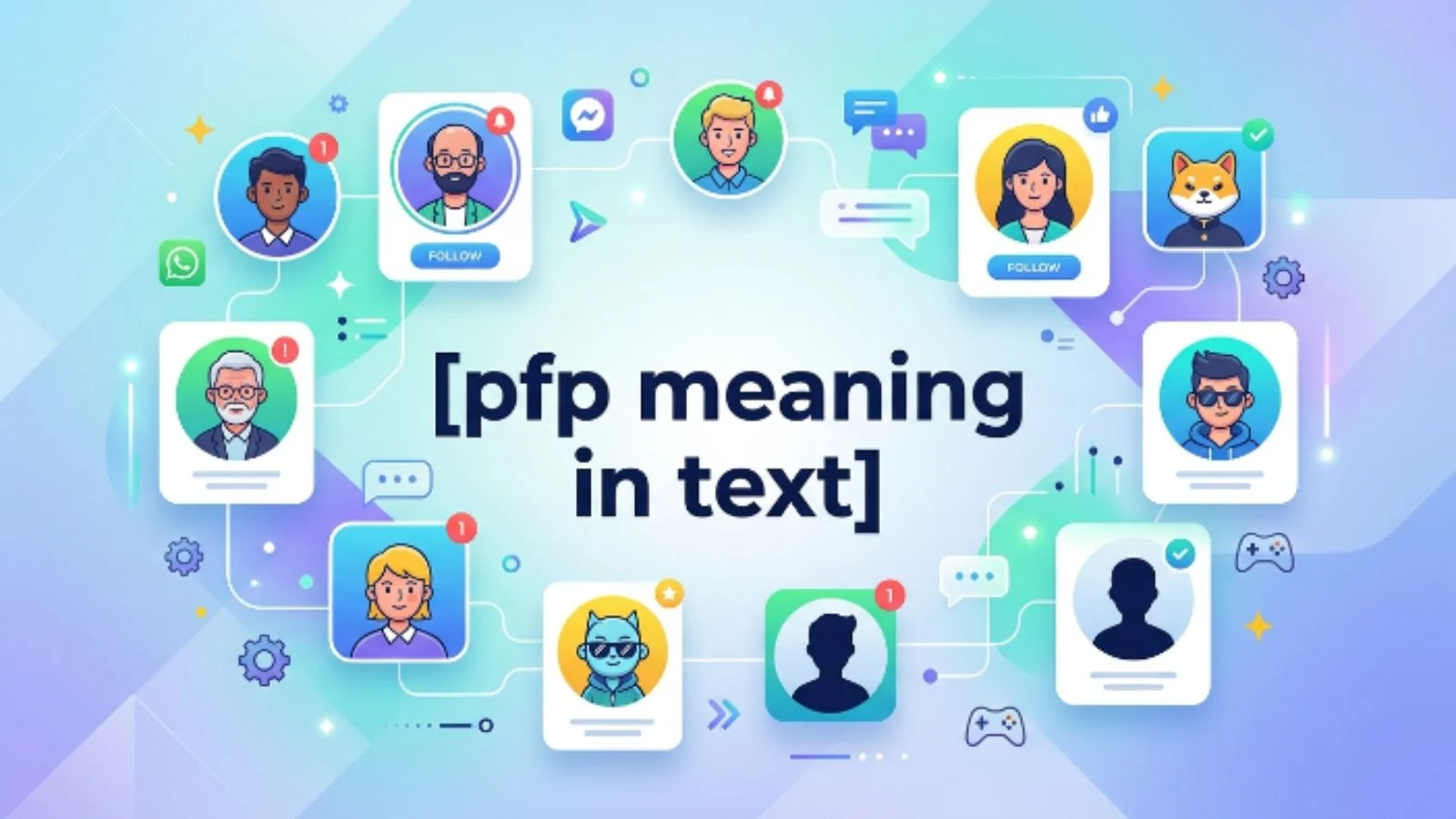
If you spend time on social media, gaming apps, or messaging platforms, you’ve probably come across the term “PFP” more than once. At first glance, it might look confusing or random, especially if you’re not familiar with internet slang.
But here’s the truth: it’s actually very simple and widely used every single day.
In this guide, you’ll clearly understand pfp meaning in text, where it’s used, why people use it, and how you can use it correctly in conversations without confusion.
What Does PFP Mean in Text?
The term PFP stands for “Profile Picture.”
It is commonly used in chats, social media posts, gaming communities, and online discussions to refer to the image that represents a user’s account.
So when someone says:
- “Nice PFP”
- “Change your PFP”
- “Your PFP looks cool”
They are simply talking about your profile picture.
Simple Meaning of PFP (In Easy Words)
In very simple language:
PFP = The picture that shows who you are online
It is the small image you see:
- On Instagram
- On Facebook
- On TikTok
- On Snapchat
- On Discord
- On WhatsApp
- On gaming platforms like Fortnite or Roblox
Think of it as your online identity photo.
Just like your real-life photo ID shows who you are in person, your PFP shows who you are on the internet.
Where Is PFP Used?
The term PFP is widely used in many digital spaces. Here are the most common ones:
1. Social Media Platforms
People often talk about PFPs on:
- TikTok
- X (Twitter)
Example:
“Your new PFP is amazing, where did you get it?”
2. Messaging Apps
In chats like:
- Messenger
- Telegram
People casually mention PFP when reacting to someone’s display picture.
Example:
“Why did you change your PFP?”
3. Gaming Communities
Gamers use the term heavily on:
- Discord
- Steam
- Roblox
- Fortnite
Example:
“Your PFP matches your gaming style.”
4. Online Forums and Communities
On platforms like Reddit or Discord servers, users often discuss PFPs to identify or recognize members quickly.
Why Do People Use PFP Instead of Saying Profile Picture?
There are a few simple reasons why “PFP” became popular:
1. Faster Typing
Typing “PFP” is much quicker than writing “profile picture.”
2. Internet Culture
Online communities love short forms and slang. It makes communication faster and more casual.
3. Widely Understood
Most internet users already know what PFP means, so it works as a universal shortcut.
4. Fits Modern Chat Style
Today’s digital communication prefers short, fast expressions like:
- LOL
- BRB
- POV
- PFP
Real-Life Examples of PFP in Conversations
Let’s look at how people actually use it in daily online chats:
Example 1: Complimenting a Profile Picture
User A: Your PFP looks so cool
User B: Thanks, I just changed it today
Meaning: Someone is praising your profile image.
Example 2: Asking About a Change
User A: Why did you change your PFP?
User B: I wanted something more simple
Meaning: Asking why someone updated their profile picture.
Example 3: Gaming Context
User A: Your PFP is scary lol
User B: It matches my character in the game
Meaning: Referring to a gaming avatar or identity.
Example 4: Social Media Trend
User A: Everyone is using anime PFPs now
User B: Yeah, it’s trending on TikTok
Meaning: Talking about profile picture trends.
PFP vs Similar Terms
Here’s a simple comparison to avoid confusion:
| Term | Meaning | Where Used |
|---|---|---|
| PFP | Profile Picture | Social media, chats, gaming |
| DP | Display Picture | WhatsApp, Facebook (common in South Asia) |
| Avatar | Digital character/image | Gaming, forums, VR |
| Username Pic | Account image | General online platforms |
Key Difference:
- PFP/DP = your personal image
- Avatar = can be a cartoon or character version of you
When Should You Use the Term PFP?
You can use “PFP” in casual online conversations, especially when:
- Talking to friends online
- Commenting on social media posts
- Chatting in gaming groups
- Discussing profile picture trends
Example situations:
- Complimenting someone’s profile picture
- Asking someone to update their image
- Talking about online identity or branding
Common Misunderstandings About PFP
Many beginners misunderstand this term. Let’s clear that up:
1. It is NOT a separate app or feature
Some people think PFP is a tool or platform. It is not.
It is just a short form for profile picture.
2. It is NOT only for gamers
Even though gamers use it a lot, it is used everywhere online.
3. It is NOT formal language
You should avoid using “PFP” in formal writing, emails, or professional documents.
Pro Tips for Using PFP Correctly
If you want to use the term like a pro, follow these tips:
- Use it in casual chats only
- Don’t overuse it in formal communication
- Understand the context before replying
- In professional settings, use “profile picture” instead
Bonus Tip:
A strong PFP can actually improve your online presence. People often judge profiles based on the image they see first.
So choose a picture that:
- Represents you well
- Is clear and high quality
- Matches your online personality
Why PFP Matters in Online Identity
Your PFP is more important than most people realize.
It helps:
- People recognize you quickly
- Build trust in online communities
- Express personality or mood
- Create branding for influencers or creators
In many cases, your PFP becomes your digital face.
Final Thoughts
Now you fully understand pfp meaning in text and how it is used across the internet.
In simple terms, PFP is just a short and modern way of saying profile picture. It is used everywhere online—from social media to gaming—and has become a natural part of digital communication.
If you are active online, understanding slang like this helps you stay confident and connected in conversations.
FAQ Section
1. What does PFP mean in text messages?
PFP means profile picture, the image used to represent your online account.
2. Is PFP only used on social media?
No, it is also used in gaming platforms, chats, and online communities.
3. Is PFP formal or informal?
PFP is informal slang, used in casual online conversations.
4. What is the difference between PFP and DP?
PFP means profile picture, while DP (display picture) is another term commonly used in some regions like South Asia.
Discover More Post
