Have you ever received a message that simply said “SFS” and wondered what it meant?
You’re not alone.
Texting slang changes fast, and new abbreviations appear on social media almost every day. If you’ve seen SFS on Snapchat, Instagram, TikTok, or in a direct message, you may be confused about what the sender is trying to say.
The good news is that the meaning is actually simple once you understand the context.
In this guide, you’ll learn the SFS meaning in text, where people use it, why it’s popular, and how to use it correctly in your own conversations.
What Does SFS Mean in Text?
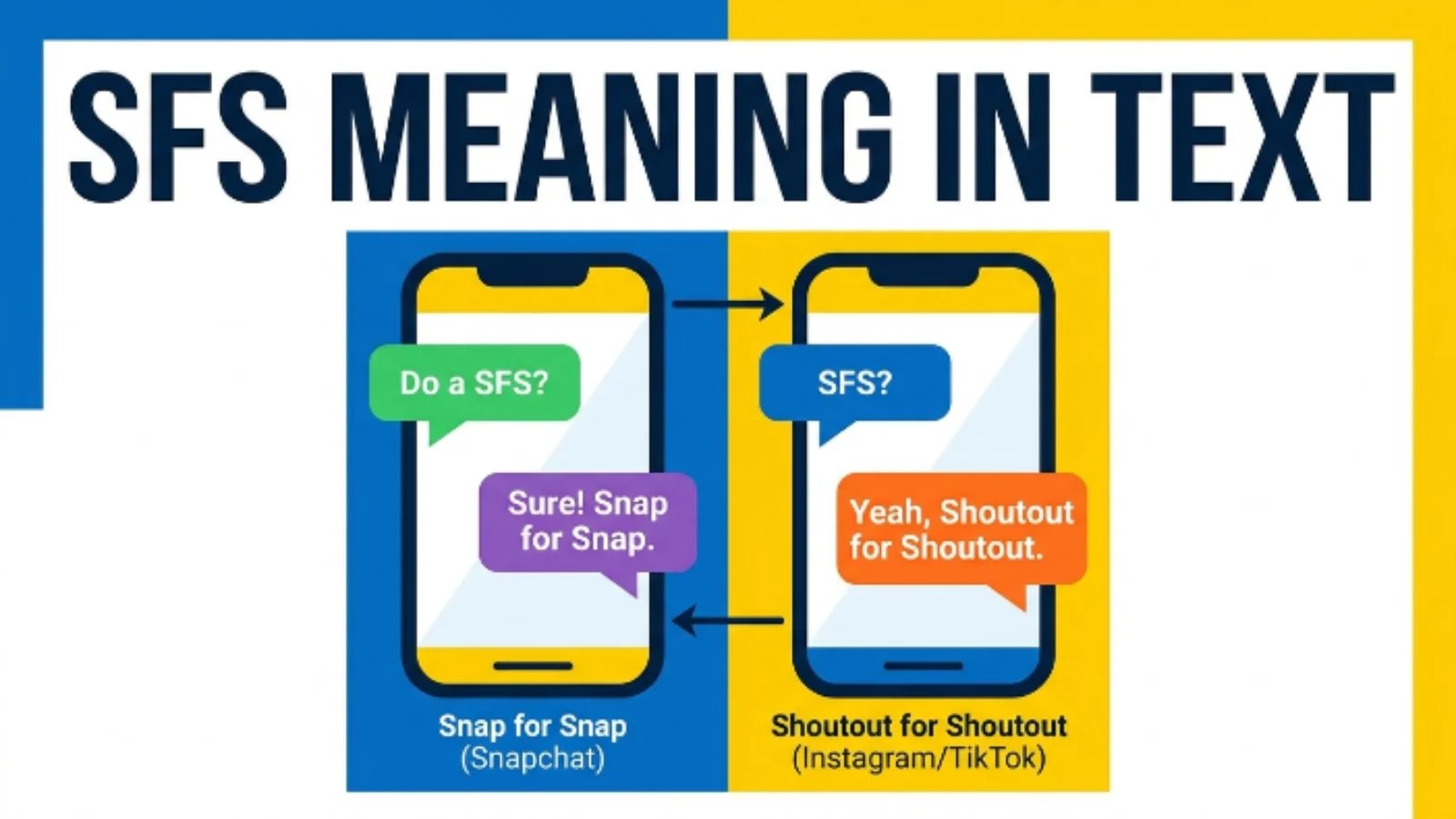
SFS means “Shoutout for Shoutout.”
It is a social media term people use when they want to exchange promotions with another person.
In simple words, one person gives a shoutout to another account, and that person returns the favor by giving a shoutout back.
Quick Definition
SFS (Shoutout for Shoutout): A mutual promotion between two users where both accounts help each other gain visibility, followers, or engagement.
This abbreviation is most common on social media platforms rather than regular text conversations.
Simple Meaning of SFS
Think of SFS as a trade.
One person says:
“I’ll promote your account if you promote mine.”
That’s the basic idea behind SFS.
For example:
- User A shares User B’s profile.
- User B shares User A’s profile.
- Both users get exposure to new audiences.
Many creators, influencers, small businesses, and content creators use SFS to grow their reach.
Where Is SFS Used?
SFS is especially popular on social media platforms where account growth matters.
Instagram is one of the biggest places where SFS is used.
Examples:
- “Anyone interested in SFS?”
- “DM me for SFS.”
- “SFS with active accounts only.”
Users often share another account in Stories and receive the same promotion in return.
Snapchat
On Snapchat, SFS is extremely common.
People post:
- “SFS?”
- “Doing SFS today.”
- “Snap me for SFS.”
The goal is usually to gain more friends, views, or subscribers.
TikTok
TikTok creators sometimes use SFS to increase visibility.
Examples:
- “SFS with creators over 5K followers.”
- “Comment SFS if interested.”
Twitter/X
Some users use SFS when trying to grow niche communities or promote content.
Direct Messages
You may receive messages like:
- “Want to do SFS?”
- “Interested in SFS tonight?”
These messages are invitations to exchange promotions.
Why Do People Use SFS?
There are several reasons why SFS became popular.
1. Gain More Followers
Many users hope to reach new audiences through someone else’s followers.
2. Increase Visibility
A shoutout can help more people discover an account.
3. Build Connections
SFS often helps creators connect with others in the same niche.
4. Promote Businesses
Small business owners sometimes use SFS to introduce their products to new customers.
5. Boost Engagement
More exposure often leads to:
- More likes
- More comments
- More profile visits
- More shares
Real-Life Examples of SFS in Text
Understanding real examples makes the slang easier to recognize.
Example 1
Friend: “Want to do SFS on Instagram?”
Meaning: They want to exchange shoutouts.
Example 2
Message: “SFS with active accounts only.”
Meaning: They only want shoutout exchanges with users who regularly post and engage.
Example 3
Story Post: “DM for SFS.”
Meaning: Send them a direct message if you’re interested in exchanging promotions.
Example 4
Snapchat Post: “Doing SFS all day.”
Meaning: The user is willing to exchange shoutouts with multiple people.
Example 5
Creator Message: “SFS if your content is similar to mine.”
Meaning: They want a promotion partnership with related accounts.
SFS vs Similar Terms
Many internet abbreviations look similar but mean completely different things.
| Term | Meaning | Purpose |
|---|---|---|
| SFS | Shoutout for Shoutout | Mutual promotion |
| F4F | Follow for Follow | Exchange followers |
| L4L | Like for Like | Exchange likes |
| C4C | Comment for Comment | Exchange comments |
| Sub4Sub | Subscribe for Subscribe | Exchange subscriptions |
| SOS | Save Our Souls/Help | Emergency expression |
The biggest difference is that SFS focuses on promotion, while other terms focus on specific engagement actions.
Can SFS Have Other Meanings?
Yes.
Although Shoutout for Shoutout is the most common meaning on social media, SFS can sometimes mean different things depending on the context.
Possible alternative meanings include:
- Snap for Snap
- Spam for Spam
- Shoutout Sunday (less common)
- Safe for School (rare)
Because slang changes between communities, always look at the conversation before deciding what SFS means.
When Should You Use SFS?
You can use SFS when you’re looking to grow your online presence and connect with others.
Good situations include:
Growing a New Account
If you’re just starting on a platform, SFS can help people discover your profile.
Promoting a Business
Small brands often exchange shoutouts with complementary businesses.
Building a Community
Creators in similar niches may use SFS to support each other.
Networking
SFS can create opportunities for future collaborations.
When You Should Avoid Using SFS
Not every situation is suitable for SFS.
Avoid using it when:
- The account is inactive.
- The audience is unrelated to your content.
- The account appears spammy.
- The promotion feels forced.
- Platform rules discourage engagement exchanges.
Quality matters more than quantity.
A relevant audience is usually more valuable than a large audience.
Common Misunderstandings About SFS
Many people misunderstand what SFS actually means.
Misunderstanding #1: SFS Means Following Someone
Not exactly.
SFS is about exchanging shoutouts, not necessarily following each other.
Misunderstanding #2: SFS Guarantees Followers
No.
A shoutout may increase exposure, but it doesn’t guarantee new followers.
Misunderstanding #3: SFS Is Only for Influencers
Anyone can use it.
Students, creators, artists, gamers, and businesses all use SFS.
Misunderstanding #4: SFS Is a Texting Acronym Only
While it appears in messages, SFS is primarily a social media growth term.
Pro Tips for Using SFS Correctly
If you plan to participate in SFS exchanges, these tips can help.
Choose Relevant Accounts
Work with people whose audiences match your content.
Check Engagement
An account with active followers is often more valuable than one with a large but inactive audience.
Be Professional
A polite message increases the chance of getting a positive response.
Example:
“Hi! I like your content. Would you be interested in an SFS?”
Keep Expectations Realistic
SFS can help increase visibility, but long-term growth comes from quality content.
Avoid Spam
Sending dozens of SFS requests may annoy people and hurt your reputation.
How to Reply When Someone Sends “SFS?”
Here are a few simple responses.
If You’re Interested
- “Sure, let’s do SFS.”
- “Sounds good.”
- “I’m interested.”
If You Want More Information
- “How would you like to do it?”
- “Which platform?”
- “What’s your audience niche?”
If You’re Not Interested
- “Thanks for asking, but I’ll pass.”
- “Not right now.”
- “I appreciate the offer.”
Is SFS Still Popular?
Yes.
Despite constant changes in social media trends, SFS remains popular among:
- Influencers
- Content creators
- Small businesses
- Artists
- Musicians
- New social media accounts
While some growth strategies evolve over time, shoutout exchanges continue to be a common way to increase visibility online.
Final Thoughts
The SFS meaning in text is usually “Shoutout for Shoutout.” It refers to a mutual promotion where two users help each other gain exposure by sharing each other’s accounts.
You’ll most often see SFS on Instagram, Snapchat, TikTok, and other social media platforms. While it’s a simple growth strategy, it works best when both accounts share similar audiences and provide value to their followers.
The next time someone sends you “SFS?”, you’ll know exactly what they’re asking.
Frequently Asked Questions
What does SFS stand for in texting?
SFS usually stands for “Shoutout for Shoutout.” It means two users agree to promote each other’s accounts.
Is SFS used on Snapchat?
Yes. Snapchat is one of the most popular platforms where users exchange SFS promotions.
Is SFS the same as F4F?
No. SFS means exchanging shoutouts, while F4F means “Follow for Follow.”
Can SFS help grow an account?
It can increase visibility and introduce your profile to new audiences, but consistent content and engagement are still important for long-term growth.
Discover More Post
