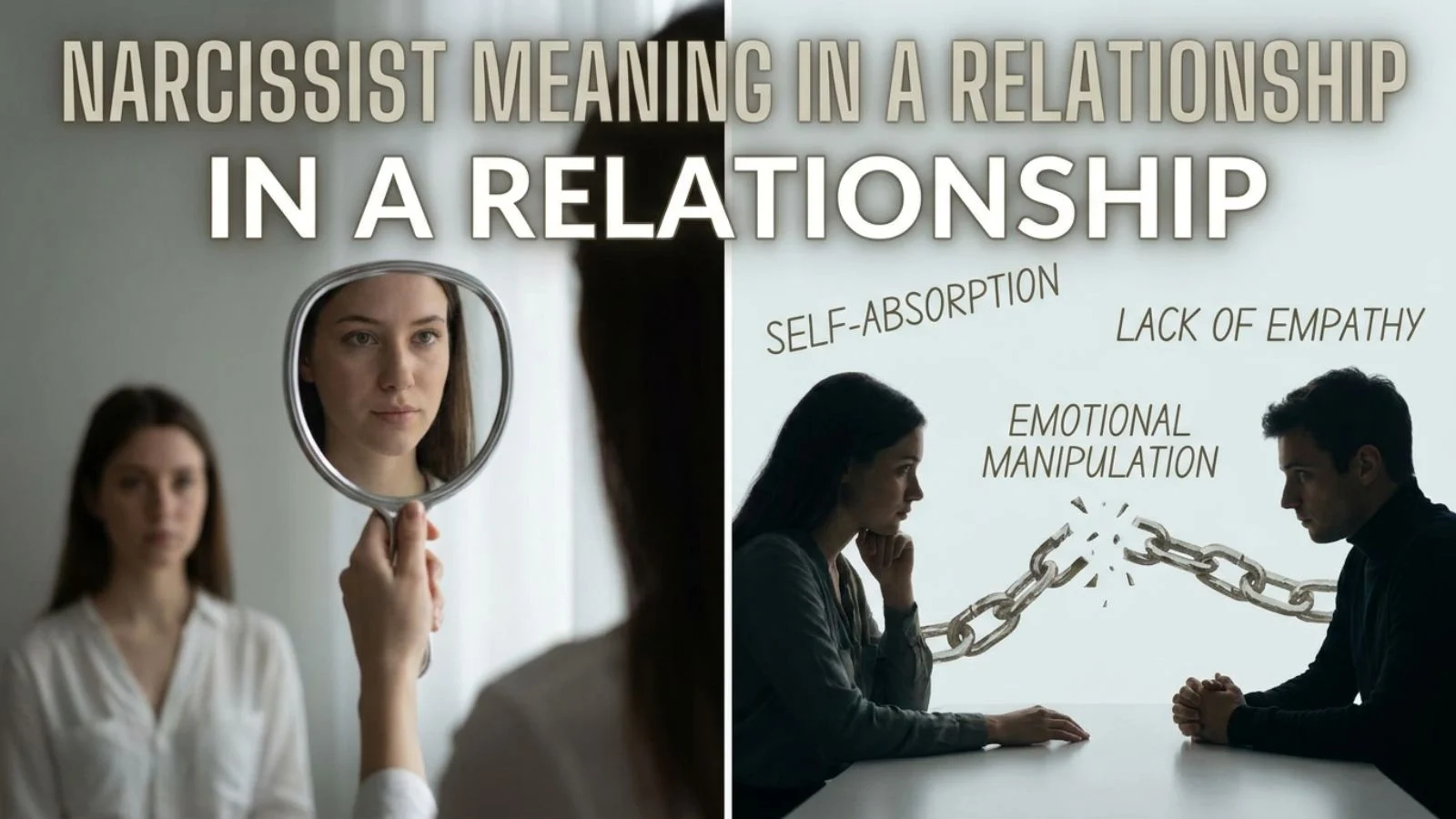
Have you ever felt like your partner makes everything about themselves?
Like your feelings don’t matter unless they affect them?
Or maybe you’re always apologizing, even when you did nothing wrong.
If that sounds familiar, you might be dealing with a narcissist in a relationship.
Let’s break this down in simple, real words — no psychology degree needed.
What Does “Narcissist Meaning in a Relationship” Mean?
A narcissist in a relationship is a person who shows strong traits of self-centeredness, lack of empathy, and an extreme need for admiration — especially in romantic partnerships.
They often:
- Put their needs first
- Ignore or minimize your feelings
- Seek constant praise
- Blame others for their mistakes
- Manipulate to stay in control
In simple terms, a narcissist in a relationship loves control more than connection.
Simple Meaning
Here’s the easy version:
A narcissist in a relationship is someone who cares more about themselves than about you.
They may say “I love you,” but their actions often say:
- “I matter more.”
- “Your feelings are not important.”
- “You exist to support me.”
Healthy love feels safe and mutual.
Love with a narcissist often feels confusing, draining, and one-sided.
Where Is This Term Used?
The phrase “narcissist in a relationship” is commonly used in:
- Relationship advice blogs
- Therapy and mental health discussions
- Social media conversations
- TikTok and YouTube relationship videos
- Breakup support communities
- Reddit forums about toxic partners
People usually use this term when trying to understand:
- Why they feel emotionally exhausted
- Why their partner never apologizes
- Why arguments always turn into their fault
- Why they feel invisible in their own relationship
It’s often searched during emotional confusion.
Why Do People Use the Term “Narcissist” in Relationships?
Because something feels “off.”
When you’re in love, you expect:
- Respect
- Care
- Emotional support
- Accountability
But when you’re with a narcissist, you often get:
- Gaslighting
- Silent treatment
- Love bombing
- Blame shifting
- Emotional neglect
The word “narcissist” helps people describe patterns that feel toxic but are hard to explain.
It gives language to emotional pain.
Real-Life Examples of Narcissist Behavior in a Relationship
Let’s make this practical.
Example 1: The Argument Twist
You say:
“I felt hurt when you ignored me at the party.”
They respond:
“Why are you always so sensitive? You ruined the night with your drama.”
Instead of addressing your feelings, they attack you.
Example 2: Love Bombing Then Withdrawal
At first, they:
- Text all day
- Call you “perfect”
- Promise a future quickly
Then suddenly:
- They become cold
- Stop communicating
- Act distant
You feel confused.
That emotional rollercoaster keeps you attached.
Example 3: No Accountability
You catch them lying.
Instead of apologizing, they say:
- “You made me do it.”
- “If you trusted me more, I wouldn’t have lied.”
- “You’re overreacting.”
They avoid responsibility every time.
Narcissist vs Healthy Partner
Here’s a simple comparison to help you see the difference:
| Trait | Narcissist in a Relationship | Healthy Partner |
|---|---|---|
| Empathy | Rarely understands your feelings | Tries to understand you |
| Apology | Avoids saying sorry | Apologizes when wrong |
| Conflict | Blames and attacks | Communicates calmly |
| Attention | Needs constant praise | Shares attention equally |
| Control | Wants power | Wants partnership |
If you constantly feel small, confused, or anxious — that’s a red flag.
Common Signs of a Narcissist in a Relationship
Not everyone who is selfish is a narcissist.
But here are common patterns:
1. Lack of Empathy
They struggle to care about your emotional needs.
2. Extreme Need for Validation
They constantly need compliments and admiration.
3. Gaslighting
They make you question your memory or reality.
Example:
“That never happened.”
“You’re imagining things.”
4. Control Issues
They may:
- Monitor your phone
- Control who you talk to
- Get jealous easily
5. Grandiosity
They believe they are superior or more important than others.
6. Emotional Manipulation
They may use:
- Guilt
- Silent treatment
- Threats of leaving
- Playing the victim
When Should You Use the Term “Narcissist” Carefully?
Here’s something important.
The word “narcissist” is often overused.
Not every:
- Confident person
- Argumentative partner
- Self-focused individual
Is a narcissist.
True narcissism can be linked to Narcissistic Personality Disorder (NPD), a mental health condition diagnosed by professionals.
So use the term thoughtfully.
Instead of labeling quickly, look at patterns.
Is it consistent behavior?
Is it long-term?
Does it damage your emotional health?
That’s what matters.
Common Misunderstandings About Narcissists in Relationships
Misunderstanding 1: They Don’t Love Anyone
Some narcissists do feel attachment.
But their love is often conditional.
It depends on control, admiration, and benefit.
Misunderstanding 2: They Are Always Confident
Many narcissists are deeply insecure inside.
Their arrogance hides fragile self-esteem.
Misunderstanding 3: They Can’t Change
Change is possible — but only if they truly recognize their behavior and seek professional help.
Without self-awareness, change is unlikely.
Why Being in a Relationship With a Narcissist Feels So Confusing
Because it’s not all bad.
There are highs and lows.
The good moments make you doubt the bad ones.
This cycle is often called:
- Idealization
- Devaluation
- Discard
First, they make you feel special.
Then they criticize and devalue you.
Sometimes they pull away completely.
This emotional push and pull creates trauma bonding.
You stay, hoping for the “good version” to come back.
Emotional Effects on You
Being with a narcissist can make you feel:
- Anxious
- Insecure
- Exhausted
- Unheard
- Not good enough
- Guilty for expressing needs
Over time, your self-esteem may drop.
You might start questioning your worth.
That’s not healthy love.
Pro Tips If You Think You’re Dating a Narcissist
Here are practical steps you can take:
1. Trust Your Feelings
If something feels wrong, don’t ignore it.
2. Set Clear Boundaries
Example:
“I will not accept being yelled at.”
Watch how they react.
Narcissists often react badly to boundaries.
3. Stop Over-Explaining Yourself
You don’t need to defend your feelings repeatedly.
4. Don’t Try to “Fix” Them
You cannot heal someone who refuses to see their behavior.
5. Seek Outside Support
Talk to trusted friends, family, or a therapist.
Isolation makes manipulation stronger.
Can a Relationship With a Narcissist Work?
Honestly?
It’s very difficult.
A healthy relationship requires:
- Mutual respect
- Emotional safety
- Accountability
- Empathy
If one person refuses to grow, the relationship becomes one-sided.
Sometimes, the healthiest choice is distance.
Final Thoughts on Narcissist Meaning in a Relationship
Understanding the narcissist meaning in a relationship is not about labeling someone out of anger.
It’s about recognizing patterns that harm you.
Love should not feel like constant anxiety.
You deserve:
- To be heard
- To be respected
- To feel safe
- To feel valued
If you constantly feel small in your relationship, it’s worth asking why.
Awareness is the first step toward emotional freedom.
Frequently Asked Questions
1. What is the simple narcissist meaning in a relationship?
A narcissist in a relationship is someone who puts their needs above yours, lacks empathy, and often manipulates or controls their partner.
2. How do I know if my partner is a narcissist?
Look for consistent patterns like lack of empathy, gaslighting, extreme need for praise, blame shifting, and refusal to take responsibility.
3. Can narcissists truly love someone?
They may feel attachment, but their love is often conditional and centered around control or validation rather than mutual care.
4. Should I leave a narcissistic relationship?
If the relationship damages your mental health and the person refuses to change, leaving may be the healthiest option. Consider seeking professional support before making big decisions.
Discover More Post
