If you spend any time online, on social media, or even just hanging out with friends, you’ve probably heard the word “douchebag” thrown around in conversations.
Sometimes it’s said jokingly. Other times, it sounds harsh and serious.
But what does it actually mean in English? Is it just an insult, or does it have a deeper context?
In this guide, you’ll understand the real meaning of “douchebags meaning in English,” how people use it, and when it can become offensive or inappropriate.
What Does “Douchebag” Mean in English?
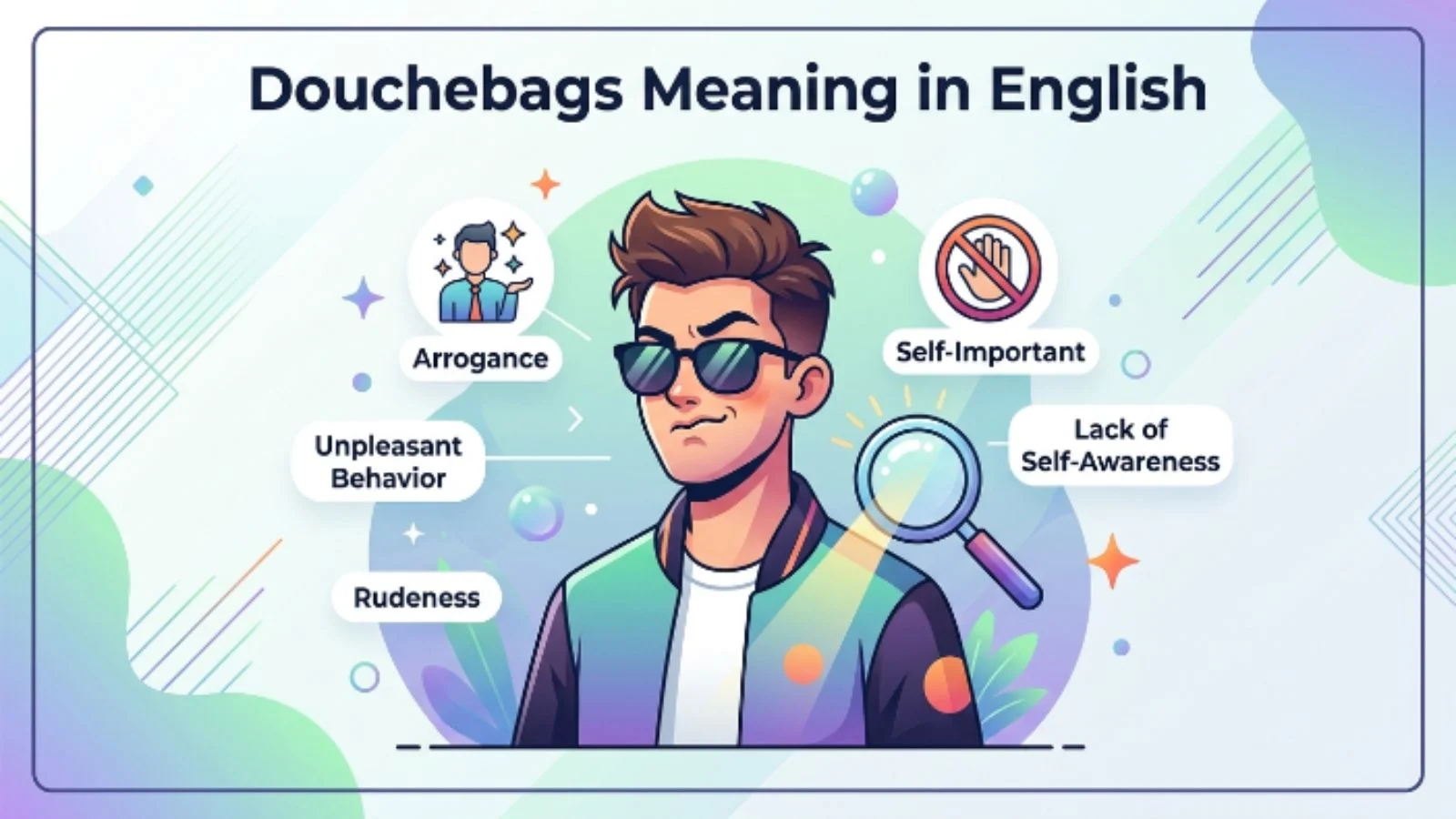
The word “douchebag” is a slang insult used in informal English to describe a person who behaves in a rude, selfish, arrogant, or annoying way.
Originally, the word “douche” referred to a medical cleaning device, but over time, it evolved into slang—mainly in American English—used as a strong insult.
Today, calling someone a “douchebag” generally means:
- The person is disrespectful
- They act arrogant or self-centered
- They behave in a socially annoying or offensive way
- They lack basic empathy or manners
In simple terms, it is a negative label for someone whose behavior is unpleasant or irritating to others.
Simple Meaning of “Douchebag”
If we break it down into very easy language:
A douchebag is a person who behaves badly and makes others feel annoyed, disrespected, or uncomfortable.
It is not a polite word. It is considered slang and often offensive depending on the context.
Where Is “Douchebag” Used?
This slang word is mostly used in informal situations. You will commonly see or hear it in:
1. Social Media
People use it in comments, tweets, or posts when reacting to someone’s behavior.
2. Movies and TV Shows
Characters often use it during arguments or emotional scenes.
3. Online Gaming
Players sometimes use it when they are angry at teammates or opponents.
4. Casual Conversations
Friends may use it jokingly or seriously depending on the situation.
However, it is rarely used in formal writing, workplaces, or professional communication.
Why Do People Use the Word “Douchebag”?
People use this term for different reasons:
1. To Express Anger or Frustration
When someone behaves rudely, people may use strong language to show emotion.
2. To Judge Behavior Quickly
It is a shortcut insult used instead of explaining detailed criticism.
3. In Humor or Sarcasm
Sometimes friends use it jokingly among themselves.
4. Online Culture Influence
Internet slang has made strong words more common in casual communication.
Real-Life Examples of Usage
Here are some simple examples to help you understand how it is used:
Example 1: Rude Behavior
“Did you see how he cut the line and didn’t even apologize? What a douchebag.”
Meaning: The person behaved selfishly and disrespectfully.
Example 2: Arrogant Attitude
“He keeps bragging about his money and treating everyone badly. He’s acting like a douchebag.”
Meaning: The person is arrogant and unpleasant.
Example 3: Online Gaming
“That player kept ruining the game for everyone. Such a douchebag move.”
Meaning: The player behaved unfairly or annoyingly.
Example 4: Sarcastic Use Among Friends
“You forgot your own birthday again? Man, you’re a total douchebag.”
Meaning: Said jokingly, not seriously offensive.
Douchebag vs Similar Terms
Here’s a simple comparison to understand how it differs from other slang insults:
| Term | Meaning | Strength | Usage Context |
|---|---|---|---|
| Douchebag | Rude, arrogant, annoying person | Strong insult | Informal, emotional situations |
| Jerk | Rude or inconsiderate person | Medium | Common casual insult |
| Idiot | Someone acting foolish | Medium | General use |
| Asshole | Extremely rude or offensive person | Very strong | Highly informal, aggressive tone |
| Snob | Someone who looks down on others | Mild to medium | Social behavior critique |
As you can see, “douchebag” sits in the stronger category of informal insults.
When Should You Use the Word “Douchebag”?
You should be very careful with this word.
You might hear it in:
- Casual conversations with friends
- Online discussions or gaming
- Movies or entertainment content
But you should avoid using it in:
- Professional environments
- Formal writing or emails
- Conversations with strangers or elders
- Academic or workplace discussions
Using it in the wrong situation can make you sound disrespectful or aggressive.
Common Misunderstandings
Many people misunderstand this slang term. Let’s clear that up:
1. It Always Means a Bad Person
Not exactly. It usually refers to behavior, not the entire personality of a person.
2. It Is Always Serious
No. Sometimes friends use it jokingly.
3. It Is a Formal Word
Wrong. It is informal slang and not suitable for professional use.
4. It Has a Literal Meaning Today
Most people do not think about its original medical meaning anymore.
Pro Tips for Using or Understanding “Douchebag”
Here are some important tips to keep in mind:
1. Understand the Tone First
The meaning changes depending on how it is said.
2. Avoid Using It in Sensitive Situations
It can easily offend people.
3. Context Matters
Between friends, it might be funny. With strangers, it can be insulting.
4. Don’t Take It Literally
It is slang, not a factual description.
5. Watch Media Usage
Movies and online content often exaggerate its usage for drama.
Final Thoughts
The term “douchebag” is a strong informal insult in English used to describe someone who behaves rudely, selfishly, or arrogantly.
While it is common in movies, online platforms, and casual speech, it is not appropriate for formal or respectful communication.
Understanding slang like this helps you better interpret real conversations, especially in digital culture where language is often informal and expressive.
The key takeaway is simple: know the meaning, understand the context, but use it carefully—or not at all.
FAQ: Douchebags Meaning in English
1. What does douchebag mean in simple English?
It means a rude, arrogant, or annoying person who behaves in an unpleasant way.
2. Is douchebag a bad word?
Yes, it is considered a strong slang insult and can be offensive depending on the context.
3. Is it okay to use douchebag in conversation?
Only in very casual settings with close friends. It should be avoided in formal or professional situations.
4. Is douchebag used in British or American English?
It is mainly used in American English but is also understood globally due to internet culture.
Discover More Post
