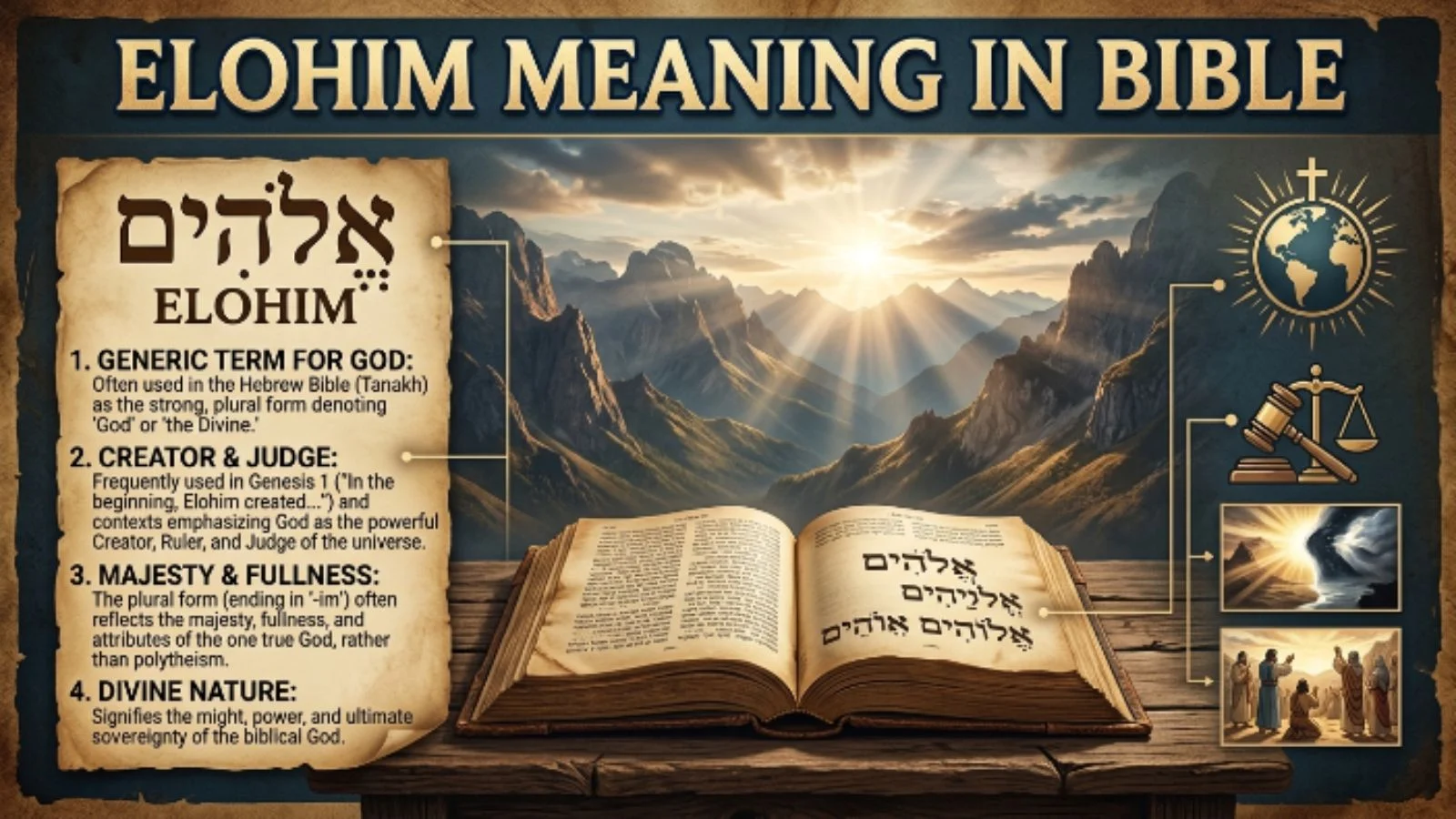
The word Elohim is one of the most important and fascinating names used for God in the Bible. If you have ever read the opening chapters of Scripture, you may have noticed this word without fully understanding its meaning.
Many people wonder why the Bible uses the term Elohim instead of simply saying “God.” Others are curious about its Hebrew origins and what it reveals about God’s nature.
In this guide, you’ll discover the meaning of Elohim, where it appears in the Bible, why it matters, and how it differs from other biblical names for God.
What Does Elohim Mean in the Bible?
Elohim is a Hebrew word commonly translated as “God” in English Bibles.
It is the first name for God that appears in Scripture:
“In the beginning Elohim created the heavens and the earth.” (Genesis 1:1)
In most English translations, the word Elohim is simply rendered as God.
At its core, Elohim refers to God’s:
- Power
- Authority
- Majesty
- Sovereignty
- Creative ability
When the Bible uses Elohim, it often highlights God as the all-powerful Creator and ruler of everything.
Simple Meaning of Elohim
In simple words, Elohim means the powerful Creator God who rules over all things.
If you were explaining it to a child, you could say:
Elohim is one of God’s names that shows He is strong, powerful, and in control of the whole universe.
The name reminds believers that God made the world and has authority over all creation.
The Origin of the Word Elohim
Elohim comes from the ancient Hebrew language of the Old Testament.
Interestingly, the word has a plural form. In Hebrew, the ending “-im” usually makes a word plural.
Because of this, some people ask:
“Why is a plural word used for one God?”
The answer is that when Elohim refers to the God of Israel, it is usually paired with singular verbs and singular descriptions.
This means the Bible is still speaking about one God, not many gods.
Many scholars believe the plural form emphasizes God’s greatness, majesty, and fullness rather than indicating multiple gods.
Where Is Elohim Used in the Bible?
The word Elohim appears thousands of times throughout the Old Testament.
Some well-known examples include:
Genesis 1:1
“In the beginning God created the heavens and the earth.”
The Hebrew word translated as God is Elohim.
Genesis 1:26
“Then God said, ‘Let us make mankind in our image.'”
This verse has led to many discussions about the nature of God.
Psalm 19:1
“The heavens declare the glory of God.”
Again, the original Hebrew uses Elohim.
Deuteronomy 10:17
This passage emphasizes God’s greatness and authority over all powers and rulers.
Why Do People Study the Meaning of Elohim?
People study Elohim because biblical names often reveal important truths about God’s character.
The name Elohim highlights:
God’s Creative Power
Elohim created everything that exists.
Nothing came into existence apart from His power.
God’s Authority
The name reminds believers that God is the ultimate ruler over heaven and earth.
God’s Majesty
Elohim points to God’s greatness, glory, and supreme position above all creation.
God’s Strength
The word emphasizes God’s ability to accomplish His purposes.
Examples of Elohim in Real-Life Bible Study
Here are a few examples of how people use the term Elohim when studying Scripture.
Example 1: Reading Genesis
A Bible student reads Genesis 1 and notices the repeated use of Elohim.
They conclude that the chapter focuses on God as Creator.
Example 2: Personal Devotion
Someone facing a difficult situation studies the meaning of Elohim and feels encouraged by God’s power and authority.
Example 3: Church Teaching
A pastor explains that Elohim reminds believers that God is greater than any problem or challenge they face.
Elohim vs Other Names for God
The Bible uses many names and titles for God. Each reveals a different aspect of His character.
| Name | Meaning | Emphasis |
|---|---|---|
| Elohim | God, Powerful Creator | Power and authority |
| Yahweh | LORD | Personal covenant relationship |
| El Shaddai | God Almighty | Strength and provision |
| Adonai | Lord or Master | Authority and lordship |
| Jehovah Jireh | The Lord Will Provide | God’s provision |
While Yahweh emphasizes God’s personal relationship with His people, Elohim focuses more on His power and majesty.
When Should You Use the Word Elohim?
The word Elohim is commonly used when:
- Studying Hebrew Bible terms
- Learning about God’s names
- Reading biblical commentaries
- Discussing Old Testament theology
- Teaching Bible studies
Many Christians use the term when they want to emphasize God as Creator and ruler of the universe.
Common Misunderstandings About Elohim
There are several misconceptions surrounding the word Elohim.
Misunderstanding #1: Elohim Means Multiple Gods
Not when referring to the God of Israel.
Although the word is grammatically plural, it usually takes singular verbs when speaking about the one true God.
Misunderstanding #2: Elohim Is God’s Only Name
The Bible contains many names and titles for God.
Elohim is just one of them.
Misunderstanding #3: Elohim and Yahweh Mean Exactly the Same Thing
Both refer to God, but they highlight different aspects of His nature.
Elohim emphasizes power and majesty.
Yahweh emphasizes God’s personal relationship with His people.
Misunderstanding #4: Elohim Is Only Used in Genesis
The word appears throughout the Old Testament, not just in the creation account.
The Spiritual Significance of Elohim
For many believers, the name Elohim carries deep spiritual meaning.
It reminds them that:
- God created them with purpose.
- God remains in control of history.
- God’s power has no limits.
- God is worthy of worship.
- Nothing is impossible for Him.
When people understand the meaning of Elohim, they often gain a greater appreciation for God’s greatness and sovereignty.
Pro Tips for Understanding Elohim
If you’re studying the Bible, these tips can help:
Read the Context
Always examine how the word is being used in a particular passage.
Compare Bible Translations
Different translations may handle Hebrew terms differently.
Learn Other Names of God
Understanding Elohim alongside Yahweh, Adonai, and El Shaddai provides a fuller picture of God’s character.
Use Bible Study Resources
Hebrew dictionaries and study Bibles can offer deeper insight into the word’s meaning.
Focus on the Message
The goal is not just learning a Hebrew word but understanding what it teaches about God.
Why Elohim Matters Today
Even though Elohim is an ancient Hebrew term, its message remains relevant.
In a world filled with uncertainty, the name reminds believers that God is:
- The Creator of all things
- The ruler of the universe
- Greater than any challenge
- Worthy of trust and worship
The name Elohim points to a God whose power and authority extend over every part of life.
Final Thoughts
The Elohim meaning in Bible centers on God’s power, authority, majesty, and role as Creator. It is the first name used for God in Scripture and remains one of the most significant terms in biblical study.
When you encounter Elohim in the Bible, remember that it highlights the greatness of God—the One who created the heavens and the earth and continues to rule over all creation.
Frequently Asked Questions
What does Elohim literally mean?
Elohim is a Hebrew word usually translated as “God.” It emphasizes God’s power, authority, and majesty.
Is Elohim the same as Yahweh?
No. Both refer to God, but Elohim highlights God’s power as Creator, while Yahweh emphasizes His personal covenant relationship with His people.
Why is Elohim plural?
Although Elohim has a plural form in Hebrew, it is usually used with singular verbs when referring to the one true God. Most scholars view this as a way of expressing greatness or majesty.
How many times does Elohim appear in the Bible?
The word appears thousands of times throughout the Old Testament, making it one of the most frequently used names for God.
What does Elohim teach us about God?
Elohim teaches that God is powerful, sovereign, majestic, and the Creator of everything that exists.
Discover More Post
