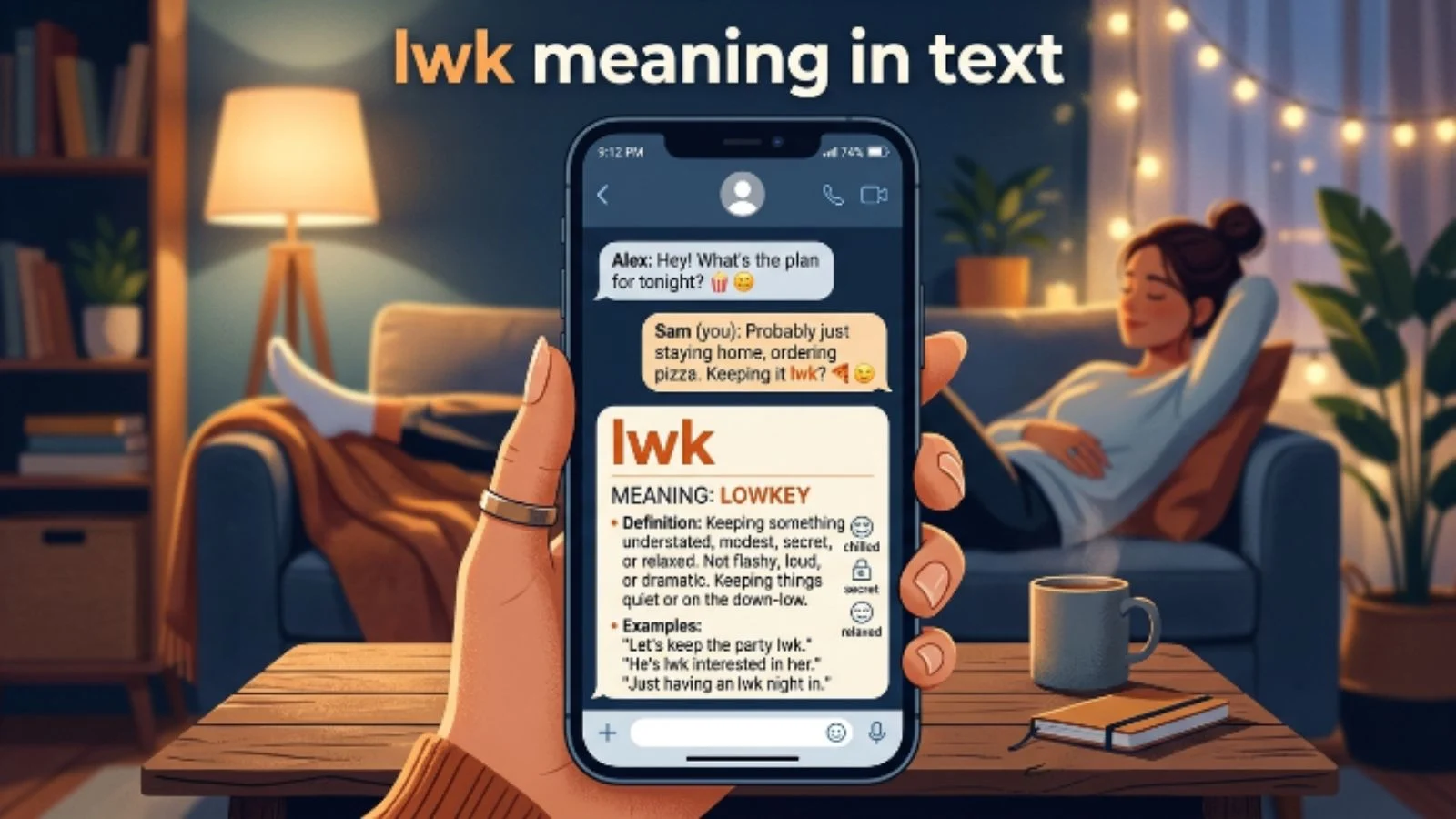
You’re scrolling through messages, maybe on Snapchat, TikTok, or Instagram, and suddenly someone texts “lwk” in the middle of a sentence. You pause. It looks short, casual, but confusing.
Is it a typo? Is it slang? Or does it have a hidden meaning?
The truth is, “lwk” is one of those modern internet abbreviations that looks simple but carries different meanings depending on context. And if you don’t understand it, you might miss the real tone of the conversation.
Let’s break it down in a clear, simple way so you never feel lost again.
What Does LWK Mean in Text?
The most common meaning of LWK in text is:
“Lowkey”
Yes, in most cases, “lwk” is just a shortened version of the word “lowkey,” which is widely used in online chatting and social media.
So when someone types “lwk,” they usually mean they are expressing something quietly, secretly, or mildly.
For example:
- “lwk I’m tired” means “I’m lowkey tired”
- “lwk that movie was good” means “I kind of think that movie was good”
It’s a casual way of expressing feelings without being too direct or dramatic.
Simple Meaning of LWK (Easy Explanation)
In simple words, LWK means:
- A soft or hidden opinion
- Something you feel but don’t strongly announce
- A quiet or subtle expression
Think of it like saying something “under your breath” in text form.
It shows you are not fully committing to a strong opinion, but you still want to share how you feel.
Where Is LWK Used?
The abbreviation “lwk” is mostly used in informal online spaces where people chat quickly and casually.
Common platforms include:
- TikTok comments
- Snapchat chats
- Instagram DMs and captions
- Twitter (X) posts
- Discord conversations
- WhatsApp chats among friends
You will almost never see it in formal writing, emails, or professional messages.
It belongs purely to internet slang culture.
Why Do People Use LWK?
People use “lwk” for a few simple reasons:
1. Speed in typing
Typing “lowkey” repeatedly takes more effort. “lwk” is faster and easier.
2. Trendy internet slang
Short forms make conversations feel modern and relatable.
3. Softening opinions
It helps people express thoughts without sounding too serious.
Example:
- “I like it” feels strong
- “lwk I like it” feels casual and less intense
4. Privacy in expression
Sometimes people don’t want to fully admit something, so they say it “lowkey.”
Examples of LWK in Real Conversations
Let’s look at real-life style examples so you fully understand it.
Example 1: Feelings
Friend A: “How do you feel about the party?”
Friend B: “lwk I didn’t enjoy it much”
Meaning: They didn’t strongly dislike it, but it wasn’t great.
Example 2: Opinions
“I lwk think this phone is better than the other one”
Meaning: A mild preference, not a strong claim.
Example 3: Emotions
“lwk I miss those days”
Meaning: A quiet emotional feeling, not openly dramatic.
Example 4: Confession
“lwk I was nervous during the exam”
Meaning: They are admitting something in a soft, casual way.
LWK vs Similar Internet Slang
LWK is often confused with or used alongside other slang terms. Here’s a simple comparison:
| Term | Meaning | Tone |
|---|---|---|
| LWK (lowkey) | Mild or hidden feeling | Soft, subtle |
| HK (highkey) | Strong or open feeling | Bold, direct |
| IMO | In my opinion | Neutral |
| TBH | To be honest | Honest, open |
| FR | For real | Strong agreement |
So while “lwk” hides intensity, “hk” does the opposite by increasing it.
When Should You Use LWK?
You should use “lwk” when:
- You want to express a light opinion
- You are talking casually with friends
- You don’t want to sound too serious
- You want to sound relatable and modern
- You are reacting to something emotionally but softly
Example situations:
- Chatting with friends online
- Reacting to memes
- Commenting on social media posts
- Casual conversations in gaming or Discord
Common Misunderstandings About LWK
Many people misunderstand “lwk,” especially those new to internet slang.
Misunderstanding 1: It is a typo
Some think it’s a typing mistake. It’s not. It’s intentional slang.
Misunderstanding 2: It has one fixed meaning
While it mostly means “lowkey,” context changes how it feels in a sentence.
Misunderstanding 3: It is formal language
It is not formal at all. Never use it in professional writing.
Misunderstanding 4: It always means secrecy
Not always. It often just means “slightly” or “kind of.”
Pro Tips for Using LWK Correctly
If you want to use “lwk” naturally like native internet users, keep these tips in mind:
1. Use it in casual settings only
Don’t use it in emails, job messages, or formal writing.
2. Pair it with opinions
It works best when expressing feelings or thoughts.
Example:
- “lwk this song is good”
3. Don’t overuse it
Using it too often can make your messages unclear or repetitive.
4. Understand the tone
It always softens meaning, so adjust your sentence accordingly.
Why LWK Became Popular Online
The rise of “lwk” comes from internet culture where:
- Short texting is preferred
- Gen Z communication style dominates social media
- People want faster emotional expression
- Slang evolves from full words into abbreviations
“Lowkey” itself became popular first, and then “lwk” evolved as a faster version.
Final Thoughts
Understanding LWK meaning in text helps you stay connected with modern online communication.
At its core, “lwk” simply means “lowkey,” a way to express something softly, casually, or indirectly. It’s not complicated, but it adds emotion and personality to digital conversations.
If you see it again, you won’t feel confused—you’ll instantly understand the tone behind it.
Internet slang like this keeps evolving, but once you learn the pattern, it becomes easy to decode any new abbreviation you come across.
FAQ: LWK Meaning in Text
1. What does LWK stand for in texting?
LWK usually stands for “lowkey,” meaning something subtle, mild, or not strongly expressed.
2. Is LWK formal or informal?
It is strictly informal and used only in casual online conversations.
3. Can LWK mean anything else?
In rare cases, it may have different meanings in niche groups, but online it almost always means “lowkey.”
4. Is LWK still popular in 2026?
Yes, it is still widely used in social media and chat platforms, especially among younger users.
Discover More Post
