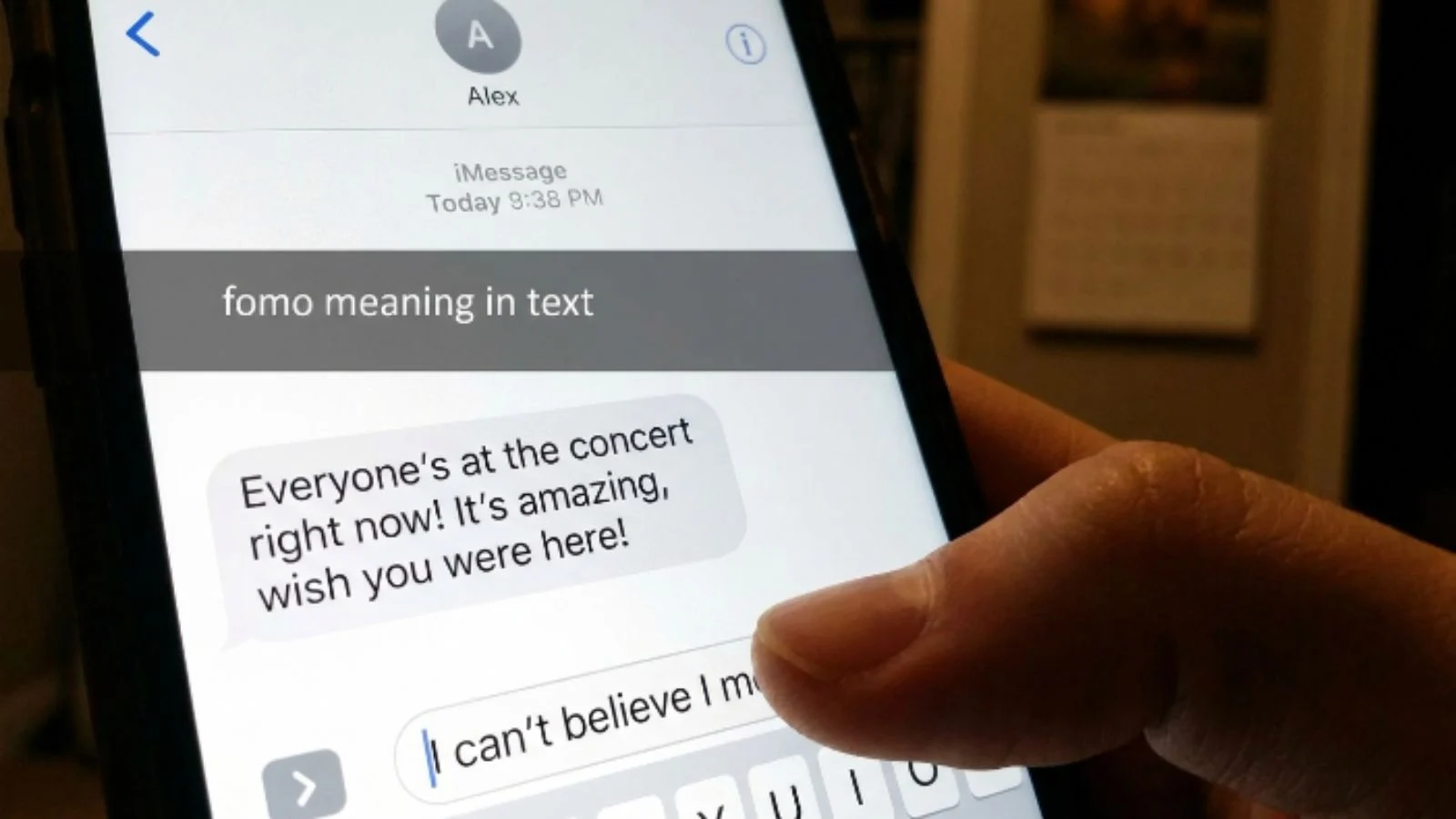
Have you ever seen someone write “I have serious FOMO” in a text message or social media post and wondered what it means?
You’re not alone.
FOMO is one of the most popular internet slang terms used in texting, social media, and everyday conversations. Whether someone is talking about a party they missed, a trending event, or even a limited-time sale, FOMO often comes up.
In this guide, you’ll learn exactly what FOMO meaning in text is, where it came from, how people use it, and when you should use it yourself.
What Does FOMO Mean in Text?
FOMO stands for “Fear Of Missing Out.”
In texting and online conversations, FOMO describes the feeling that other people are having exciting experiences while you’re missing them.
Quick Definition
FOMO means feeling worried, anxious, or disappointed that you are not participating in something enjoyable, important, or exciting that others are experiencing.
For example:
Friend: “Everyone is going to the concert tonight.”
You: “Now I have major FOMO!”
This means you’re feeling like you’re missing out on something fun.
Simple Meaning of FOMO
In simple words, FOMO is:
- Wanting to be included
- Feeling left out
- Wishing you could join an event
- Being afraid you’ll miss something exciting
- Feeling pressure to keep up with others
Think about scrolling through social media and seeing your friends at a beach party while you’re sitting at home.
That feeling of wishing you were there is FOMO.
Where Is FOMO Used?
FOMO is extremely common across the internet and in daily conversations.
Text Messages
People use FOMO when talking to friends and family.
Example:
- “You guys are at the game? I have FOMO already.”
Social Media
You’ll often see FOMO on:
- TikTok
- Snapchat
- X
- Threads
Example:
- “Looking at everyone’s vacation pictures is giving me FOMO.”
Group Chats
When friends make plans and someone can’t attend:
- “Have fun tonight. I’m going to have serious FOMO.”
Shopping and Sales
Companies often use FOMO in marketing.
Examples:
- Limited-time offers
- Flash sales
- Exclusive discounts
The goal is to make people feel they might miss out if they don’t act quickly.
Why Do People Use FOMO?
People use FOMO because it quickly describes a common emotion.
Instead of saying:
“I’m feeling disappointed because everyone else is doing something exciting and I’m not there.”
They simply say:
“I have FOMO.”
It’s shorter, easier, and instantly understood by many people online.
Some reasons people use it include:
- To express feeling left out
- To joke about missing an event
- To show excitement
- To describe social pressure
- To explain why they want to join something
Real-Life Examples of FOMO in Text
Here are some common examples and what they mean.
Example 1
Text:
“Everyone’s watching the new series tonight and I’m stuck working. Major FOMO.”
Meaning:
The person wishes they could join everyone else.
Example 2
Text:
“I skipped the music festival and now the pictures are giving me FOMO.”
Meaning:
They regret not attending after seeing others enjoy it.
Example 3
Text:
“Don’t post any more food photos. My FOMO is getting worse.”
Meaning:
They’re joking that they’re missing out on delicious food.
Example 4
Text:
“I bought the tickets because I didn’t want FOMO later.”
Meaning:
They purchased tickets because they were afraid of regretting missing the event.
Example 5
Text:
“Seeing everyone travel this summer gives me FOMO.”
Meaning:
The person wishes they were traveling too.
FOMO Meaning in Different Situations
Social Events
The most common use of FOMO.
Examples:
- Parties
- Weddings
- Concerts
- Festivals
- Gatherings
Travel
Many people experience FOMO when seeing vacation photos online.
Example:
- “Those beach pictures are giving me travel FOMO.”
Entertainment
Movies, TV shows, sports events, and gaming can all create FOMO.
Example:
- “Everyone’s talking about the finale. I have FOMO.”
Shopping
Brands often encourage FOMO through limited availability.
Example:
- “Only 10 items left.”
- “Sale ends tonight.”
Investments and Trends
People sometimes use FOMO when discussing trends or opportunities.
Example:
- “A lot of people bought it because of FOMO.”
FOMO vs Similar Terms
Many internet slang terms are related to FOMO. Here’s how they compare.
| Term | Meaning | Difference |
|---|---|---|
| FOMO | Fear of missing out | Feeling left out of experiences |
| OMO | Missing out | General idea without emphasizing fear |
| YOLO | You only live once | Encourages taking chances |
| JOMO | Joy of missing out | Enjoying not participating |
| Peer Pressure | Feeling pressured by others | Broader social influence |
FOMO vs JOMO
These are complete opposites.
FOMO:
“I wish I was at the party.”
JOMO:
“I’m happy staying home instead.”
When Should You Use FOMO?
Use FOMO when:
- You missed an event
- You feel left out
- You wish you could participate
- You’re joking about missing something
- You want to express regret about not joining
Examples:
- “I’m getting FOMO seeing everyone’s photos.”
- “I couldn’t go and now I have FOMO.”
- “The event looks amazing. FOMO is real.”
When Should You Avoid Using FOMO?
While FOMO is widely understood online, it may not fit every situation.
Avoid using it:
- In highly formal business documents
- In academic writing
- In professional reports
- When speaking to audiences unfamiliar with internet slang
Instead, use phrases such as:
- “I feel left out.”
- “I regret missing the event.”
- “I wish I could have attended.”
Common Misunderstandings About FOMO
FOMO Does Not Always Mean Anxiety
Many people think FOMO always refers to serious emotional distress.
In reality, it’s often used casually.
Example:
- “You got pizza without me? FOMO.”
This is usually playful, not serious.
FOMO Isn’t Only About Parties
People often associate FOMO with social events.
However, it can apply to:
- Travel
- Shopping
- Entertainment
- Sports
- Technology
- Online trends
FOMO Doesn’t Mean Jealousy
Jealousy and FOMO are different.
Jealousy means wanting what someone else has.
FOMO means feeling like you’re missing an experience.
Sometimes the two overlap, but they are not identical.
Why FOMO Became So Popular
Social media played a huge role in making FOMO a common phrase.
Platforms constantly show:
- Vacation photos
- Event highlights
- Success stories
- New purchases
- Lifestyle updates
Because people see what others are doing all day, feelings of missing out can happen more frequently.
As a result, FOMO became a quick and relatable way to describe that feeling.
Pro Tips for Using FOMO Correctly
Keep It Casual
FOMO works best in relaxed conversations.
Example:
- “You guys are having all the fun. FOMO!”
Use It Naturally
Don’t force it into every conversation.
Use it only when discussing something you’re missing.
Understand the Tone
FOMO can be:
- Serious
- Humorous
- Playful
- Emotional
The meaning often depends on context.
Pair It With Context
Instead of simply writing:
- “FOMO.”
Try:
- “Seeing your concert videos is giving me FOMO.”
This sounds more natural and engaging.
Common Texting Examples
Here are some messages you might see:
- “I have FOMO after seeing those photos.”
- “Weekend trip looks amazing. FOMO!”
- “Everyone’s hanging out without me. FOMO is real.”
- “You’re making me jealous and giving me FOMO.”
- “I couldn’t get tickets and now I have major FOMO.”
Final Thoughts
Understanding FOMO meaning in text is simple once you know what it stands for.
FOMO means “Fear Of Missing Out.” It’s used when someone feels left out of an exciting event, experience, opportunity, or trend. You’ll commonly see it in text messages, social media posts, group chats, and everyday conversations.
Whether you’re talking about a concert, vacation, party, or even a flash sale, FOMO is a quick way to express that feeling of wishing you were part of the action.
Frequently Asked Questions
What does FOMO mean in texting?
FOMO stands for Fear Of Missing Out. It describes the feeling that you’re missing an exciting experience that others are enjoying.
Is FOMO a positive or negative term?
It can be both. Sometimes it’s used seriously to describe feeling left out, while other times it’s used jokingly among friends.
What is an example of FOMO in a text?
Example:
“Everyone’s at the concert and I’m stuck at work. FOMO!”
This means the person wishes they could attend the concert.
What is the opposite of FOMO?
The opposite is JOMO, which stands for Joy Of Missing Out. It means being happy and comfortable choosing not to participate.
Discover More Post
