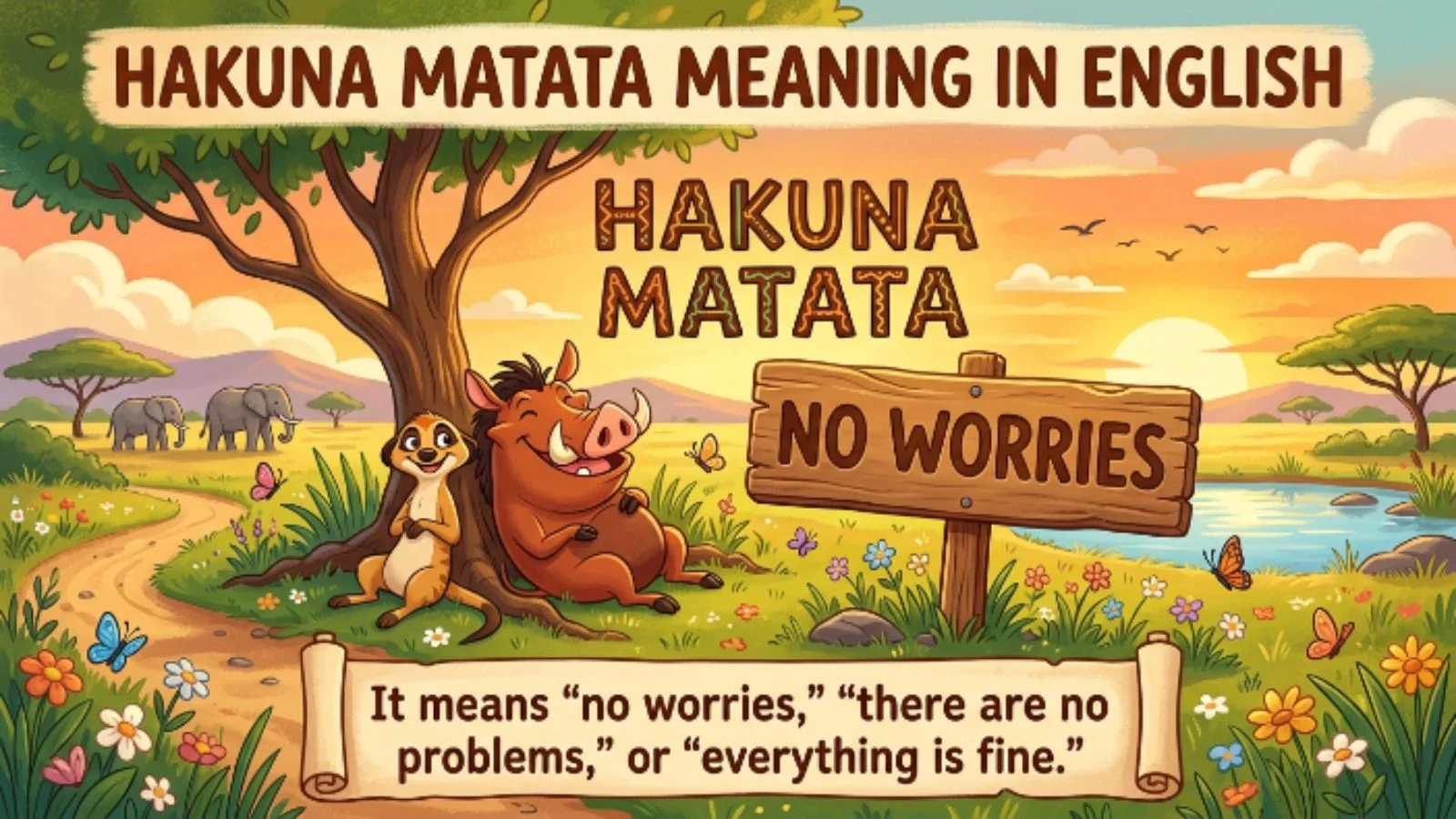
Hakuna Matata is a popular phrase that means “no worries”, “no problems,” or “don’t worry about it” in English.
People use this expression to tell someone to relax and not stress about a situation. It encourages a positive and carefree attitude toward life.
In simple words:
- Hakuna = There is not / there are no
- Matata = Problems, troubles, or worries
So together, Hakuna Matata literally means “there are no problems.”
Today, many English speakers use the phrase to express happiness, peace, and freedom from stress.
Simple Definition of Hakuna Matata
Hakuna Matata is a Swahili phrase that means:
“No worries.”
“Everything is okay.”
“Don’t stress about it.”
It is often used when someone is worried about something and needs reassurance.
Quick Definition Table
| Phrase | Language | English Meaning |
|---|---|---|
| Hakuna Matata | Swahili | No worries |
| Hakuna Matata | Swahili | No problems |
| Hakuna Matata | Swahili | Don’t worry |
| Hakuna Matata | Swahili | Everything is fine |
Origin of Hakuna Matata
The phrase comes from Swahili, a language widely spoken in East Africa.
Swahili is used in countries such as:
- Kenya
- Tanzania
- Uganda
- Rwanda
- Burundi
For many years, local communities used “Hakuna Matata” in everyday conversations.
It was a normal phrase used to comfort people and remind them not to worry too much about life’s challenges.
How Hakuna Matata Became Famous Worldwide
Although the phrase existed for centuries, it became internationally famous through the Disney movie:
The Lion King
In the movie, two beloved characters:
- Timon
- Pumbaa
teach the young lion:
- Simba
to live without worrying about the past.
The film also featured the famous song:
- Hakuna Matata
After the movie’s release, millions of people around the world began using the phrase.
Today, many people recognize “Hakuna Matata” even if they do not speak Swahili.
The Literal Meaning of Hakuna Matata
To understand the phrase better, let’s look at each word separately.
Hakuna
The word Hakuna means:
- There is no
- There are no
- Not having
Matata
The word Matata means:
- Problems
- Troubles
- Difficulties
- Concerns
Combined Meaning
When combined:
Hakuna + Matata = There are no problems
This meaning later evolved into the English expression:
“No worries.”
Why Do People Say Hakuna Matata?
People use this phrase for many reasons.
To Comfort Someone
If a friend is worried, you can say:
“Hakuna Matata.”
Meaning:
“Everything will be okay.”
To Create a Relaxed Mood
The phrase helps create a calm and positive atmosphere.
To Encourage Positivity
It reminds people not to spend all their energy worrying about things they cannot control.
Real-Life Examples of Hakuna Matata
Here are some simple examples.
Example 1
Sarah: I accidentally sent the wrong file.
Emma: Hakuna Matata. Just send the correct one.
Explanation: Emma tells Sarah not to panic because the mistake can be fixed.
Example 2
Ali: I missed the bus today.
Ahmed: Hakuna Matata. Another one will come soon.
Explanation: Ahmed encourages Ali to stay calm.
Example 3
Mia: I’m nervous about tomorrow’s test.
Sophia: Hakuna Matata. You studied hard.
Explanation: Sophia reassures Mia that she is prepared.
Example 4
David: I spilled coffee on my shirt.
Mark: Hakuna Matata. It happens to everyone.
Explanation: Mark is helping David feel less embarrassed.
Example 5
Lisa: My phone battery died.
Anna: Hakuna Matata. Use my charger.
Explanation: Anna offers a solution and reduces Lisa’s stress.
How Hakuna Matata Is Used in Daily Conversations
The phrase can be used in many situations.
Casual Conversations
Friends often use it jokingly or casually.
Example:
“Forgot your keys? Hakuna Matata.”
Family Conversations
Parents may use it to calm children.
Example:
“Don’t worry about the broken toy. Hakuna Matata.”
Workplace Conversations
It can sometimes be used informally among colleagues.
Example:
“We can fix the report tomorrow. Hakuna Matata.”
Personality Traits Associated with Hakuna Matata
People who frequently use this phrase are often seen as:
Optimistic
They focus on solutions rather than problems.
Relaxed
They stay calm under pressure.
Positive
They look for the good side of situations.
Easygoing
They do not become upset easily.
Supportive
They help others feel comfortable and confident.
The Hakuna Matata Lifestyle
Many people view Hakuna Matata as more than just a phrase.
They see it as a way of life.
Key Ideas Behind the Lifestyle
- Worry less
- Enjoy the present moment
- Stay positive
- Learn from mistakes
- Focus on solutions
- Appreciate simple joys
This mindset can help reduce unnecessary stress.
However, it does not mean ignoring responsibilities.
Does Hakuna Matata Mean Never Having Problems?
No.
This is a common misunderstanding.
Everyone experiences problems in life.
Hakuna Matata does not mean:
- Problems do not exist
- Responsibilities should be ignored
- Planning is unnecessary
Instead, it means:
- Don’t let worries control your life
- Stay calm when facing challenges
- Handle problems with a positive attitude
Common Situations Where You Can Say Hakuna Matata
When Someone Is Nervous
“You’re prepared. Hakuna Matata.”
When Someone Makes a Small Mistake
“It can be fixed. Hakuna Matata.”
When Travel Plans Change
“We’ll find another route. Hakuna Matata.”
When Someone Feels Embarrassed
“Don’t worry. Hakuna Matata.”
When Something Minor Goes Wrong
“It’s not a big issue. Hakuna Matata.”
Modern Usage of Hakuna Matata in 2026
In 2026, people continue to use Hakuna Matata in many ways.
Social Media Posts
Examples:
- “Weekend mode: Hakuna Matata.”
- “Vacation vibes only. Hakuna Matata.”
- “Life is better with a Hakuna Matata mindset.”
Text Messages
Examples:
- “Hakuna Matata, I’ll handle it.”
- “No worries. Hakuna Matata.”
Motivational Content
Many creators use the phrase to encourage positivity and resilience.
Travel and Lifestyle Content
Travel bloggers often use Hakuna Matata to describe relaxed and stress-free experiences.
Different Ways to Say Hakuna Matata in English
Several English expressions have similar meanings.
| Expression | Meaning |
|---|---|
| No worries | Everything is okay |
| No problem | It’s not an issue |
| Don’t worry | Relax |
| It’s all good | Everything is fine |
| Take it easy | Stay calm |
| Don’t stress | Avoid worrying |
| Relax | Stay calm and comfortable |
Common Mistakes and Misconceptions
Mistake 1: Thinking It Means “Goodbye”
Some people mistakenly believe Hakuna Matata means goodbye.
This is incorrect.
It means “no worries” or “no problems.”
Mistake 2: Using It in Serious Emergencies
Hakuna Matata may not be appropriate in serious situations.
For example:
- Medical emergencies
- Major accidents
- Serious financial problems
In these cases, practical help is usually more important than casual reassurance.
Mistake 3: Assuming It Is English
Many people use the phrase in English conversations.
However, it originally comes from Swahili.
Mistake 4: Thinking It Encourages Laziness
Some believe the phrase means avoiding responsibility.
Actually, it encourages staying calm while dealing with responsibilities.
Benefits of Adopting a Hakuna Matata Mindset
A healthy Hakuna Matata attitude can provide several benefits.
Reduced Stress
Worrying less can improve emotional well-being.
Better Relationships
Positive people often communicate more effectively.
Improved Confidence
You may feel stronger when facing challenges.
Greater Happiness
Focusing on solutions instead of problems can increase life satisfaction.
Better Mental Focus
Less stress often leads to clearer thinking.
Hakuna Matata in Popular Culture
The phrase remains one of the most recognized expressions in global entertainment.
Because of its appearance in:
- The Lion King
- Hakuna Matata
people from different countries understand its meaning.
It has appeared on:
- T-shirts
- Posters
- Travel souvenirs
- Social media captions
- Inspirational quotes
Its popularity continues decades after it first became globally famous.
When Should You Avoid Using Hakuna Matata?
There are situations where the phrase may not fit.
During Serious Discussions
People facing major problems may need empathy and practical support.
In Formal Business Documents
The phrase is usually too casual for official communication.
During Sensitive Situations
Someone dealing with grief or loss may need a more thoughtful response.
Quick Summary Table
| Topic | Explanation |
|---|---|
| Meaning | No worries |
| Language | Swahili |
| Literal Translation | There are no problems |
| Popularized By | The Lion King |
| Tone | Positive and relaxed |
| Common Use | Comforting others |
| Modern Use | Texts, social media, conversations |
| Main Message | Stay calm and positive |
Frequently Asked Questions
What is the exact meaning of Hakuna Matata in English?
Hakuna Matata means “no worries,” “no problems,” or “don’t worry.” It is used to express a carefree and positive attitude.
Is Hakuna Matata a real Swahili phrase?
Yes. Hakuna Matata is an authentic Swahili phrase that has been used in East Africa long before it became famous worldwide.
Who made Hakuna Matata famous?
The phrase became globally popular through Disney’s animated movie The Lion King and its famous song.
Can I use Hakuna Matata in everyday conversation?
Yes. It is commonly used in casual conversations to reassure someone or encourage a relaxed attitude.
Does Hakuna Matata mean everything is perfect?
No. It does not mean life has no problems. It simply encourages people not to worry excessively about challenges.
Is Hakuna Matata appropriate in professional settings?
It depends on the workplace. Informal teams may use it casually, but formal business communication usually requires more professional language.
Why do people love the phrase Hakuna Matata?
People love it because it promotes positivity, calmness, optimism, and a stress-free outlook on life.
Conclusion
Hakuna Matata is a simple yet powerful phrase that means “no worries” or “there are no problems.” Originating from the Swahili language of East Africa, it became globally recognized through The Lion King and continues to inspire people around the world. The phrase encourages a positive mindset, emotional balance, and a focus on solutions rather than stress. While it does not mean ignoring responsibilities, it reminds us to face life’s challenges with confidence and calmness. By understanding its meaning, history, and proper usage, you can use Hakuna Matata naturally in conversations and embrace a healthier, more optimistic approach to everyday life.
Discover More Post
